
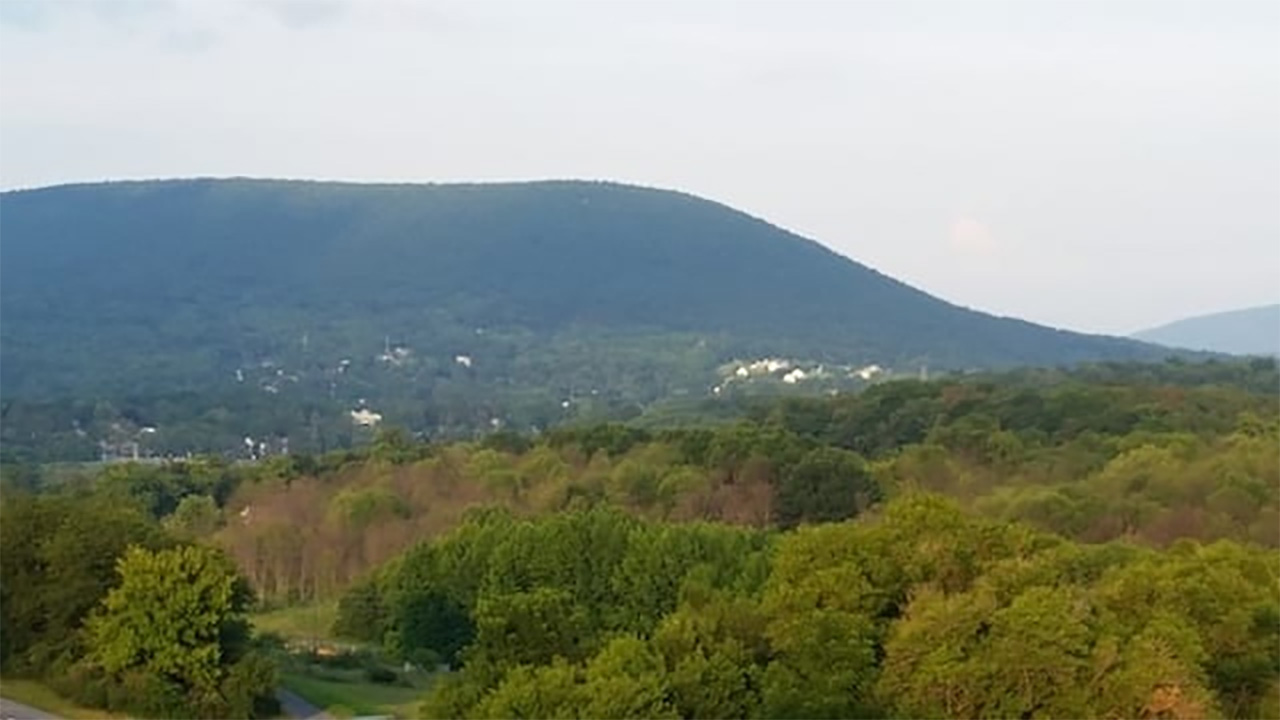
Today we’re highlighting a column by emeritus director John Hook entitled ‘Remembering Where You Are,’ originally published by StateCollege.com in April of 2017 when he was serving as Conservancy president. The message is a good one for all of us to remember. This passage in particular caught my attention:
(I)f we’re talking about the best way to dispose of nuclear fuel rods, or solve an equation, or transmit data, yes, benchmarking is a useful tool… For sociological decisions, however, things can be and are different. Setting policies, creating regulations that deal with how people act, what they can do, where they can go — these things do change from place to place.
As far as large universities are concerned – those with a campus of 25,000 or more students – Penn State is one of only a select few that are geographically isolated (several hours) from a major population center of 1 million or more people… And that isolation affects the community. Benchmarking, or adopting industry-best practices that are in use at other large universities for rules, regulations and policies, can be short-sighted, unnecessary, wasteful, and produce unintended consequences.
John nails it. There is nothing wrong with recognizing the Nittany Valley as a place apart and therefore – and this is where we too often lose people around here – making decisions based on the peculiar needs and preferences arising from those unique conditions. From politics to culture to University policy, I think our “best version of ourselves” will arise from processing the received wisdom of the wider world through the lens of an informed understanding of what distinguishes this place, versus any other, as special – our genius loci.

We have to know – really know – who we are in order to make the decisions that are best for us. Some will call this myopia, and I acknowledge that this approach risks a descent into navel gazing. But I would argue that there is a balance that allows us to preserve the essence of what has drawn people to this place for centuries. It’s almost palpable at times, that special something that infused us with the resiliency to shake off struggle and scandal. We disregard it at our peril.
Trying to turn the Nittany Valley into Austin, Columbus, Research Triangle, Silicon Valley, or anywhere else is hammering a square peg into a round hole; we’ll fail in the attempt, while also tragically failing to appreciate, and perhaps even spoiling, the precious treasures in our possession. I always think of Aesop’s fable of the dog and the bone.
So I think the key to unlocking our future lies in the past, in learning our shared story, deepening our understanding of what made (and makes) the Nittany Valley special, and cultivating a sense of duty to steward it for future generations. John makes another great point:
The Pennsylvania State University is the reason Happy Valley as we know it exists. If not for a few turns of historic fate in the mid-1800’s, State College wouldn’t be on a map because it wouldn’t have been founded. Bellefonte would be the biggest town around and the Bellefonte School District would likely stretch down the valley all the way to the Huntingdon County line.
This is precisely why the Mount Nittany Conservancy focuses on the intersection of place and people. Our identity, our entire way of being and sense of ourselves as Penn Staters or residents of State College, is inextricably tied to the land itself. It’s why it is so great that this piece was authored by the president of Conservancy, an organization that personifies better than any other our people’s love affair with their home. All that we are flows directly through the unique characteristics and appeal of the location we inhabit. Don’t ever let anyone tell you there isn’t magic on the Mountain or something in the water. We can’t escape that, and we shouldn’t try.
In my mind, it is not unreasonable – in fact, I think it makes very good sense – to imagine that a Penn State administrator, local elected official, or community leader might actively consider preservation and perpetuation of the unique character of this place (our genius loci) in making decisions about our future. I don’t oppose the construction of tall buildings in Downtown State College, for example, but I also welcomed consideration of the unique “college town” atmosphere of College Ave as an irreplaceable cultural resource in those discussions. I understand the University’s drive to offer more amenities, but I wonder if we consider how further sequestering the campus population from the local business community will, over time, erode and cheapen the residential college experience. There are countless examples where we could benefit from pausing to consider how our actions might make us less like the Nittany Valley and more like everywhere else.
“Everywhere else” is nowhere you want to be (if you do, you can go there right now). “Everywhere else” would have crumbled under the pressures we endured with grace. The identity, character, and spirit of this place are our greatest assets. To continue benefiting from them, however, we must be intentional in how we think, speak, and care about them.