Culture

  • A Perch Worthy of a Lion

    A Perch Worthy of a Lion

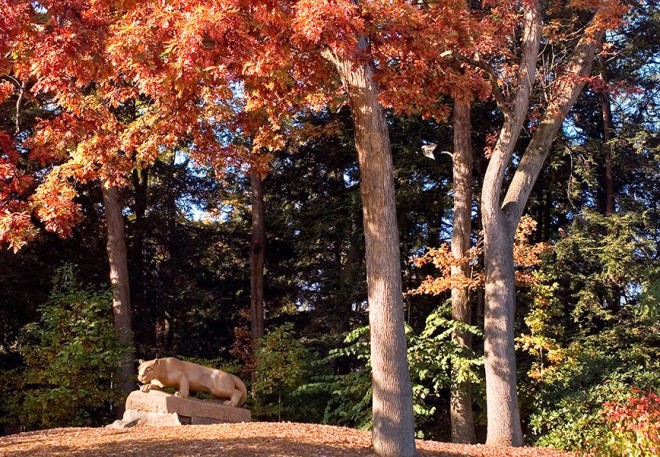
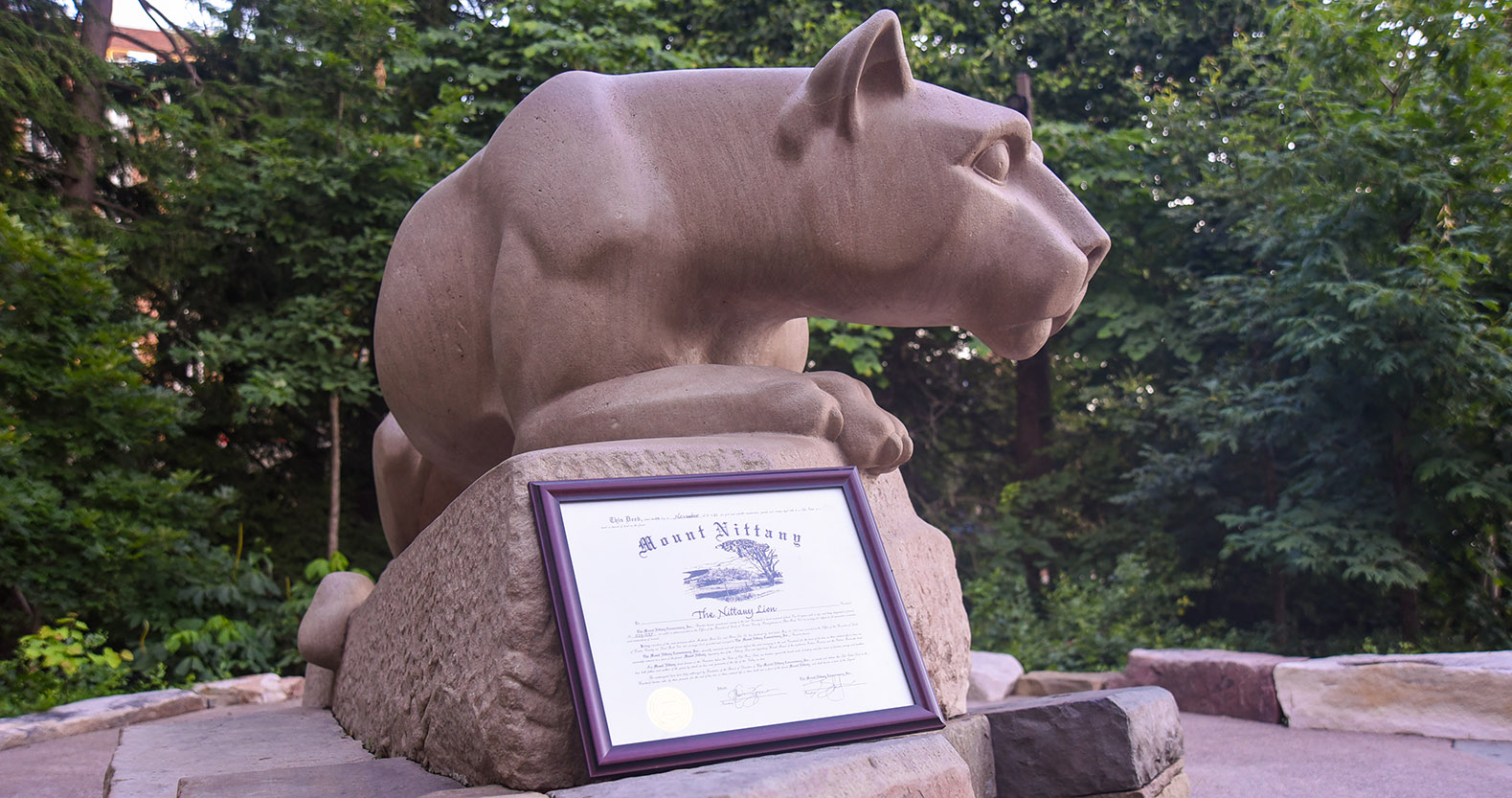
    Roughly 14 years ago, Penn State unveiled the enhanced pedestal and landscaping for the Nittany Lion Shrine funded by the Class Gift of 2012. Stonework for the Lion’s new “perch” was provided by local master craftsman Phil Hawk, and the delicate project was managed by campus landscape architect Derek Kalp, whom the Mount Nittany Conservancy is lucky to have serving on our board of directors. The entire process was chronicled in detail in the article linked below. Derek is quoted extensively, explaining the meticulous care taken in refreshing the home of Pennsylvania’s second-most-photographed landmark (behind the Liberty Bell in Philadelphia).

    Header from Penn State's website featuring the title 'How to create a habitat fit for a Nittany Lion' under the Campus Life section.

    As Derek Kalp and his colleagues in Penn State’s Office of Physical Plant pondered the future of the Nittany Lion shrine, the most important thing to them was that it have a setting worthy of its stature.

    Seventy years, thousands of visitors, and frequent repairs had brought the University’s beloved shrine to a point where extensive changes were desperately needed to ensure its continued beauty and accessibility.

    Kalp, landscape architect, and his coworkers in Campus Planning and Design considered that challenge for the better part of three years — until the University’s Class of 2012 stepped up and made a gift to improve the existing shrine and its surroundings.

    The Penn State Alumni Association commissioned a short documentary film that chronicles Hawk’s work creating the Shrine’s new stone pedestal. It’s worth a watch and is sure to warm any heart that loves the name of Dear Old State. Check it out…

    The Penn State News article linked above includes three additional vignettes further expanding on the Lion Shrine’s restoration. Those are embedded here for the enjoyment and convenience of our readers.

    Lemont Pennsylvania inhabitant and master stone mason, Phil Hawk has worked on long list of projects, applying his talents to create waterfalls, unique decks and facades. His work is remarkable. If you have ever been to Beaver Stadium at the corner of Porter Road and Park Avenue and noticed the the beautiful Penn State sign shrouded in stone, you can begin to appreciate his work. He was contracted to refurbish probably the most iconic landmark in the minds and hearts of all Penn Staters– the Nittany Lion Shrine. Listen and watch as Hawk explains his approach to redressing this beloved Penn State landmark. Credit: C Roy Parker.

    While physical plant landscape architect, Derek Kalp was overseeing the Lion Shrine remodel, crews came upon an abundance of white chips scattered at the base of the statue. Discover what those chips were as Derek Kalp explains.

    Many have seen it. Austere. Stoic. Those words and others have been used to describe the Nittany Lion Shrine. If you’re a PSU graduate, you should have a picture or two of you and the Lion in an album or a hard drive somewhere, but most are taken in the daytime. When university officials placed the initial lighting around the landmark, security may have been the overriding concern– not aesthetics. See how physical plant utilized the on-campus expertise of a lighting design expert from the School of Theatre to recreate the shrine area. Credit: C Roy Parker.

  • Four Coaches, Four Speeches at THON

    Four Coaches, Four Speeches at THON

    A little over a decade ago, I published an anthology of three times Penn State’s head football coach addressed the crowd at THON – Joe Paterno near the end of his career; Bill O’Brien during his short, but memorable stint in the role; and James Franklin, at the very beginning of his time in Happy Valley. With Matt Campbell, the 17th full-time coach of the Nittany Lions, making his debut at the Spring semester’s signature event this year, I thought it an appropriate time to revisit and update that compilation.

    “I wish the whole world could see and feel what’s in this room right now. Love and commitment… in 58 years at Penn State, I’ve never been more proud than right now.” —Joe Paterno

    In 2009, one of his final seasons on the sidelines, Joe Paterno famously spoke to an enthusiastic audience at the BJC, as seen in the video above. As the years pass, the name, image, and memory of Paterno seem increasingly remote, more and more like icons or totems, further separating us from the simpler reality of the flesh-and-blood creature. I still love this clip for the ways in which it distills and captures Joe the person, earnest and disarmed. Brief, but from the heart. It recalls a happier time and reminds us of the actual human being who undeniably gave copiously of himself to better the institution and his community.

    “Just having arrived at Penn State, you don’t know anything about THON until you’re in the arena. It’s awesome… I have all the respect in the world for everything that you guys do.” —Bill O’Brien

    THON 2012 was probably one of the most emotional weekends of a uniquely tumultuous year. Under siege from outside and bitterly divided within, the community rallied around THON and its irrefutable statement about who and what “We Are” and clung tightly to it, comforted by the reminder that no amount of venom could dilute all that good done each year in Penn State’s name. It was with this backdrop that new head football coach Bill O’Brien took the stage. Only two weeks into his tenure, O’Brien was tasked with establishing credibility with a hopeful, but unsteady and unsure (in some quarters, quite skeptical) Nittany Nation, beginning the process of injecting enthusiasm and drumming up support for his football program, comforting a reeling and grieving community, and paying proper respect to the event and its purpose. His success here was a sign of things to come.

    O’Brien stayed for only a short time, but probably two of the most critical years in the history of the town and school. He is seen here passing one of his first (of many) tests, standing in the same spot as his legendary predecessor and praising the special qualities of Penn State in that direct and honest way that endeared him to so many of us so quickly.

    “What makes us special is the people, the people that understand we are part of something greater than just ourselves. We can make a difference in people’s lives. We can make a difference in the community.” —James Franklin

    If Bill O’Brien’s tenure represented the time of painful transition, the energy and optimism of James Franklin captured our hopes for a gradual return to normalcy, the true arrival of a new era. Few who stood in the Bryce Jordan Center back then, before even the steady rollback of NCAA sanctions had begun, could have imagined that Franklin’s team was less than two years away from a magical run to the Big Ten title. Names like Trace McSorley and Saquon Barkley were barely spoken, to say nothing of future icons like Sean Clifford, Micah Parsons, Tyler Warren, or Kaytron Allen. In over a decade at the helm of Penn State football, Franklin reinvigorated the program and helped lead the Nittany Lions back to national prominence. The mutual belief shared by coach and fandom that energized his inaugural THON appearance captures the very best of a stretch in Penn State football history that I hope will ultimately be remembered favorably.

    “Everybody keeps talking about ‘the power of Penn State.’ And quite honestly, being here tonight, this is the power of Penn State. What I would tell each and every one of you, along your journey, the most powerful thing you can do is make a difference in the lives of others.”—Matt Campbell

    Video Credit: Lyle Alenstein (@LAlenstein) on X

    Matt Campbell represents, in many respects, Penn State’s first “normal” head football coach hiring since 1966. He may not be the orator that his predecessor was, but in his straightforward delivery, there is an earnest authenticity that, early on, is resonating with Penn Staters. It has been fun to see him encountering the culture and spirit of the place as he and his staff acclimate to their new home. And yes, Coach, that “We Are” still needs some more work, but the longer you stay, the deeper the personal meaning – it will keep getting easier and more natural as you go.

    As I said following Franklin’s debut back in 2014 and reiterate now, these moments with Campbell are just the latest in a long line that carry us ever further away from the living memory of Joe Paterno and that night in February 2009. Almost undeniably, time slows down in Happy Valley, but most assuredly, it never stops. The story continues. New pages are added and new chapters written. In looking back, we are reminded of our own resilience in the face of adversity and strengthened by that knowledge as we return our gazes forward, ready “for the future that we wait.”

  • Remembering Where You Are

    Remembering Where You Are

    Today we’re highlighting a column by emeritus director John Hook entitled ‘Remembering Where You Are,’ originally published by StateCollege.com in April of 2017 when he was serving as Conservancy president. The message is a good one for all of us to remember. This passage in particular caught my attention:

    (I)f we’re talking about the best way to dispose of nuclear fuel rods, or solve an equation, or transmit data, yes, benchmarking is a useful tool… For sociological decisions, however, things can be and are different. Setting policies, creating regulations that deal with how people act, what they can do, where they can go — these things do change from place to place.

    As far as large universities are concerned – those with a campus of 25,000 or more students – Penn State is one of only a select few that are geographically isolated (several hours) from a major population center of 1 million or more people… And that isolation affects the community. Benchmarking, or adopting industry-best practices that are in use at other large universities for rules, regulations and policies, can be short-sighted, unnecessary, wasteful, and produce unintended consequences.

    John nails it. There is nothing wrong with recognizing the Nittany Valley as a place apart and therefore – and this is where we too often lose people around here – making decisions based on the peculiar needs and preferences arising from those unique conditions. From politics to culture to University policy, I think our “best version of ourselves” will arise from processing the received wisdom of the wider world through the lens of an informed understanding of what distinguishes this place, versus any other, as special – our genius loci.

    A scenic view of a valley at sunset, featuring a stadium, buildings, and trees. The sky is painted in shades of orange and yellow, while the landscape below shows autumn colors in the foliage.

    We have to know – really know – who we are in order to make the decisions that are best for us. Some will call this myopia, and I acknowledge that this approach risks a descent into navel gazing. But I would argue that there is a balance that allows us to preserve the essence of what has drawn people to this place for centuries. It’s almost palpable at times, that special something that infused us with the resiliency to shake off struggle and scandal. We disregard it at our peril.

    Trying to turn the Nittany Valley into Austin, Columbus, Research Triangle, Silicon Valley, or anywhere else is hammering a square peg into a round hole; we’ll fail in the attempt, while also tragically failing to appreciate, and perhaps even spoiling, the precious treasures in our possession. I always think of Aesop’s fable of the dog and the bone.

    So I think the key to unlocking our future lies in the past, in learning our shared story, deepening our understanding of what made (and makes) the Nittany Valley special, and cultivating a sense of duty to steward it for future generations. John makes another great point:

    The Pennsylvania State University is the reason Happy Valley as we know it exists. If not for a few turns of historic fate in the mid-1800’s, State College wouldn’t be on a map because it wouldn’t have been founded. Bellefonte would be the biggest town around and the Bellefonte School District would likely stretch down the valley all the way to the Huntingdon County line.

    This is precisely why the Mount Nittany Conservancy focuses on the intersection of place and people. Our identity, our entire way of being and sense of ourselves as Penn Staters or residents of State College, is inextricably tied to the land itself. It’s why it is so great that this piece was authored by the president of Conservancy, an organization that personifies better than any other our people’s love affair with their home. All that we are flows directly through the unique characteristics and appeal of the location we inhabit. Don’t ever let anyone tell you there isn’t magic on the Mountain or something in the water. We can’t escape that, and we shouldn’t try.

    In my mind, it is not unreasonable – in fact, I think it makes very good sense – to imagine that a Penn State administrator, local elected official, or community leader might actively consider preservation and perpetuation of the unique character of this place (our genius loci) in making decisions about our future. I don’t oppose the construction of tall buildings in Downtown State College, for example, but I also welcomed consideration of the unique “college town” atmosphere of College Ave as an irreplaceable cultural resource in those discussions. I understand the University’s drive to offer more amenities, but I wonder if we consider how further sequestering the campus population from the local business community will, over time, erode and cheapen the residential college experience. There are countless examples where we could benefit from pausing to consider how our actions might make us less like the Nittany Valley and more like everywhere else.

    “Everywhere else” is nowhere you want to be (if you do, you can go there right now). “Everywhere else” would have crumbled under the pressures we endured with grace. The identity, character, and spirit of this place are our greatest assets. To continue benefiting from them, however, we must be intentional in how we think, speak, and care about them.

  • Looking Up at Mount Nittany, Wherever We May Be

    Looking Up at Mount Nittany, Wherever We May Be

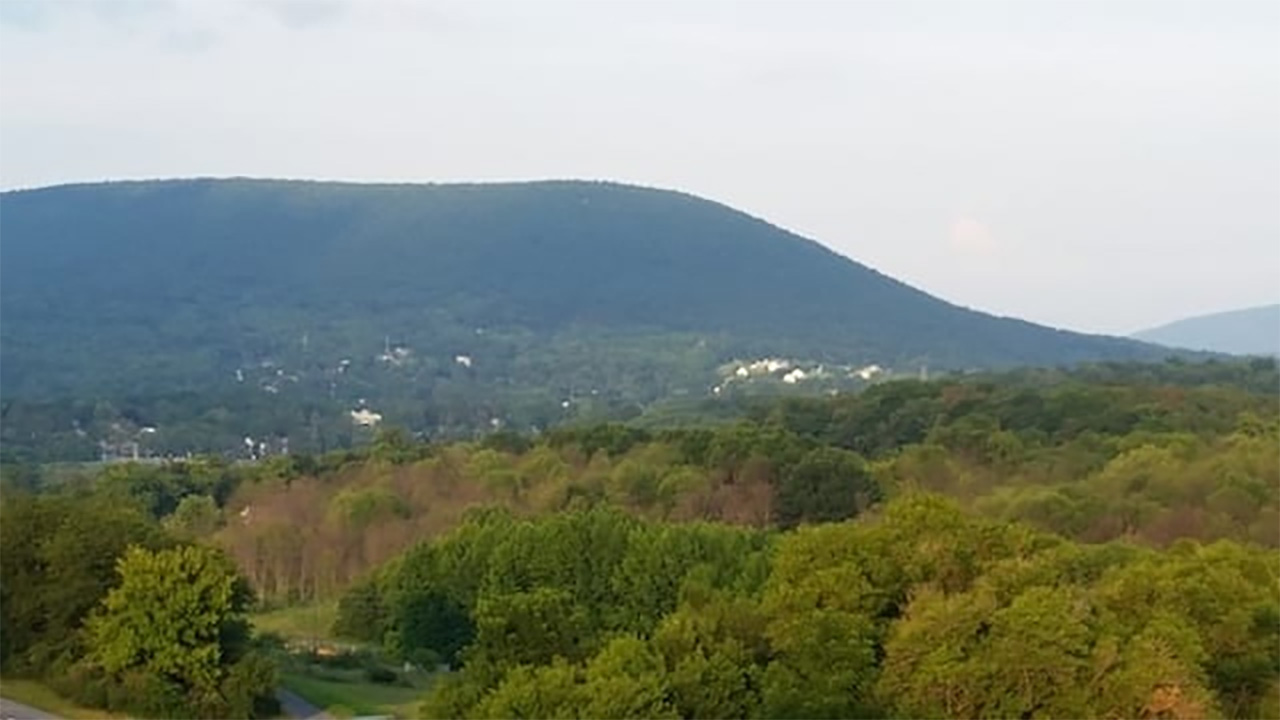
    As summer quickly fades and the fall season approaches us, it’s important to take a moment and reflect.

    Mount Nittany serves many purposes for the inhabitants of the Nittany Valley, but as the winds of change draw nearer, one can look ahead and see those physical effects of seasonal change reflected in the Mountain. 

    Currently, the leaves of the trees who call the Mountain home still vibrantly display the lush green of summer. Slowly, but surely, her leaves will begin to change to the fiery shades of fall as the weeks pass by. For some—myself included—it’s easy to lose track of the days and feel somewhat disconnected from the present. 

    In the past, I’ve found myself feeling as though time has flown with each glance of the calendar. But lately, I’ve allowed myself to focus more intently on the present and appreciate it by simply looking up. Up at the towering, full trees around us, and up at Mount Nittany wherever I may be in town. 

    Time will continue to pass, and the summer season won’t last forever. But each time I feel myself losing that present focus, I look to the Mountain, and I see her abundant shades of green. It helps to ground me, and allows me to be thankful. It comforts me, and helps me reflect on the wonderful summer months we’ve enjoyed, but also offers an appreciation of the current moment we are in.    

    I hope anyone feeling similar can feel that reassurance when they look to Mount Nittany. We can appreciate the time that’s passed us by, but focus on the moment at hand. It helps the days slow down, and offers a feeling of excitement for the days, weeks, and months we have to look forward to. 

  • Celebrating Centre Foundation’s 40th Anniversary and Mount Nittany’s Future

    Celebrating Centre Foundation’s 40th Anniversary and Mount Nittany’s Future

    The Mount Nittany Conservancy has partnered with Centre Foundation for many years. Centre Foundation stewards more than $200,000 in Mount Nittany-focused endowments thanks to the love and generosity of so many across so many years. These endowed funds produce annual revenue that contributes toward the all-volunteer Mount Nittany Conservancy’s annual budget. Centre Foundation provides the Mount Nittany Conservancy stability and sustainability for our continuing work to conserve the Mountain for Penn Staters, Central Pennsylvanians, and all friends of nature.

    Gifts to Centre Foundation’s Mount Nittany Conservancy Fund, Mount Nittany Blue and White Trails Fund, and Ben Novak Fellowship Fund grows our endowments and are a way to support the Mount Nittany Conservancy in perpetuity.

    Vincent Corso, senior staff writer for The Centre County Gazette and regular contributing writer with Town & Gown, writes on Centre Foundation’s 40th anniversary:

    “Every day, countless people and organizations work to do good in Centre County. Mentors and counselors work with children, giving them a path to success. People and families in need find food, safety, and shelter through many helping hands. Beautiful streams and forests are protected and maintained by people who care about the future of the planet. Those with developmental disabilities find strength and purpose from community members who know they are more than a label. All around the community, artists find venues for performing and platforms for sharing their work and giving back, uplifting everyone.

    “All these things and more—accomplished through tremendous work by an impressive network of nonprofits and community organizations—help make Centre County a wonderful place to live for all. One thing is for sure: none of this work could be done without a lot of support. 

    “For forty years, Centre Foundation has helped to give these organization a solid foundation, by believing that everyone can be a philanthropist. …

    “It is easy to see the impact of the Centre Foundation at work. All you have to do is ask the organizations it supports. 

    “The Mount Nittany Conservancy was established around the same time as the Centre Foundation and has grown right along with it.

    “‘As we’ve grown, we’ve looked to Centre Foundation as a stable, trustworthy, and permanent ally for supporting our mission of the conservation of Mount Nittany. We’re proud to have established multiple endowments with Centre Foundation and to encourage Penn Staters and townspeople who care about Mount Nittany to provide for its permanent conservation in part through growing Centre Foundation’s Mount Nittany Conservancy Fund. We look forward to our missions and organizations growing old together through the years, decades, and even centuries to come,’ says conservancy Vice President Tom Shakely.”

  • One-Room Schools Bring History Alive

    I have written about efforts to “mine” the rich preserves of knowledge buried in the past to release their power in the present. Previous installments of this series have focused mainly on conceptual conveyances of this potential—books, stories, and documents.

    But what about our need for a more visceral, immersive experience, our tendency to learn by doing? “Show, don’t tell.” It’s a lesson we are taught beginning in grade school and yet it still bears repeating by campaign consultants and corporate marketing gurus. For those seeking to better understand the story of our place, two local one-room school houses offer a more hands-on approach for encountering heritage, a chance to directly show residents a piece of their history.

    The Boogersburg School is a one-room schoolhouse located in Patton Township that went into service in 1877. Today, it serves as a sort of living museum piece, maintained by the Centre County Historical Society (CCHC). Having been restored and furnished in a manner consistent with its original purpose, the quaint little building now offers a connection to a prior age that, while quite alien to us today, finally vanished more recently that you might imagine. Amazingly, the schoolhouse was in use by the school district up until 1952. It doesn’t seem all that long ago, in relative terms, and although the building’s use evolved over time, it’s still remarkable to consider that a structure dating to the Rutherford B. Hayes administration made it to the early nuclear age.

    When the doors were finally closed for good, the schoolhouse stood empty for many years before being used as an artist’s studio for a time. It was then purchased by a couple, Bob Struble and Susan Crary, who undertook the historical restoration work and gifted the property to the CCHC for caretaking. Boogersburg has become a traditional field trip location for area school classes, and the heart of the experience comes through the volunteer “school marms,” who teach about the school to visiting students, even dressing in period clothing. They explain the history of the building, what it was like to attend school there, and even touch on the names and stories of former students.

    Dozens of volunteers each year, many of them retired local teachers, give of their time and talent to create a special experience that helps preserve local memory. Many others pitch in to help maintain the physical plant and grounds. Every August, the schoolhouse also hosts a back-to-school day when children and their families can experience a taste of life in a forgotten era, sitting in authentic wooden desks, using “soapstone, slate, and chalkboards,” and receiving lessons in subjects like spelling and “mental math.”

    Further down the Mount Nittany Expressway, another former one-room school has been reborn in the present thanks to the efforts of community leaders. The Rock Hill School in Linden Hall opened in 1893, the third and final one-room schoolhouse built to educate the children of Harris Township. Rock Hill didn’t survive as long as its Patton Township counterpart, ceasing to operate as a school in 1937. Although it hosted elections and meetings into the 1980s, the school eventually became used for storage until recent interest offered a new possibility. It was resolved that the building should not be forgotten, but rather restored to its original state and made open to the public.

    With the goal of “restor(ing) and preserv(ing) the historic Rock Hill School while revitalizing it to become an active learning center for present and future generations,” a small non-profit corporation was formed to manage the property and accept tax deductible donations to fund the restoration and upkeep. The drive to restore Rock Hill originated from within the community and was funded largely through private contributions; according to its website, the effort has generated more than $207,000 in donations to date. In addition to hosting educational experiences for State College School District and Penn State students, Rock Hill functions as a sort of community center, hosting local meetings, line dancing, an annual Halloween party, and serving as a bike path rest stop. Its supporters remain enthusiastic and active in exploring new uses for the space and raising awareness about it.

    Both buildings have direct connections to the founding era of Penn State. Moses Thompson, who, along with his partner James Irvin, owned the Centre Furnace, was a key figure in selecting the site for the original Farmers High School. Thompson also built the Boogersburg School and donated property for the 1850 schoolhouse that preceded the Rock Hill School. Additionally, Rock Hill counts among its former faculty William G. Waring, one of Penn State’s Founders, Strong and Great. As the College’s first superintendent of the grounds, Waring, who was also a horticulture professor, was crucial in establishing the early campus; he even planted the legendary Old Willow.

    Perhaps the key point to extract from both stories is the integral role played by the people of the Nittany Valley in breathing life into these institutions. Without the imagination and generosity of the Strubles and the generational effort of countless other to support the CCHC, the Boogersburg School would not have had its second act. It takes the energy and passion of the volunteer “teachers” there to produce a memorable experience for visitors. Likewise, the determination and hard work of local enthusiasts intent on keeping the Rock Hill School alive have brought forth a new and valuable community resource.

    Of course, these aren’t the only interesting historical structures found within Centre County. The Historical Society also famously maintains the Centre Furnace Mansion, which is rife with significance to the founding of Penn State and unfolding of the regional story. Boalsburg’s Blacksmith Shop recently completed a successful fundraising campaign to pay for needed repairs (with help from the Boalsburg Village Conservancy, another small, volunteer venture similar to the Rock Hill School group). The Curtin Village in Howard recreates a 19th century workers’ village and preserves the family home of former PA governor Andrew Curtin. There are others still.

    They all offer a chance to connect with tangible, physical reminders of what came before. Specifically, for an area that so prizes education and whose growth has been so caught up in it, the Boogersburg and Rock Hill schools offer a window into a style of learning, and of daily living, that have all but vanished. Thanks to the vision of donors and the ongoing support of dedicated community volunteers, these two facilities continue to maintain a fascinating link to our forebears that provides us with compelling knowledge and vital perspective.

  • Looking Back to Move Forward

    Looking Back to Move Forward

    Why should we care about the past?

    The potential answers to this question are many and varied, but certainly, in looking back to understand what came before, we can see something of ourselves reflected back at us, extracting value from the experience. It is not without peril. Genuine self-examination risks exposure to the truth about our flaws. Likewise, we must resist the allure of romance; if infatuation with a fictional ideal commands our full attention, we miss the view of all that is around us and ahead.

    And yet a part of us cannot help but yearn to know. As human beings, we are natural storytellers, creatures of narrative. We seek knowledge of our past to better orient ourselves within our own stories—personal and communal. These journeys of exploration can yield many benefits, but ultimately, we undertake them because to do so is fundamental to our nature.

    Tom Shakely has written about “why place matters” and the importance of Mount Nittany and conserving both “human and environmental ecologies.” As challenging as it is fulfilling, this sort of work evolves.

    In college towns like ours, the relationship between past and present is closer to the surface in everyday life than most other places.

    Today, the clarion of Old Main’s bell tower, an immediately recognizable sound seared into the memory of generations, no longer requires an actual bell. Powerful speakers, however, do blast a digital recreation of the real bell, long since permanently silenced, whose tolling across campus once marked each day’s passage. Here, the technology of the present resurrects the sounds of the past. The stately central administration building itself, among the most recognizable and “collegiate” of our symbols, sits just a couple blocks from the Millennium Science Complex, which looks more like the stuff of modern sci-fi than an image from the bucolic campus ideal.

    Similarly, the Hotel State College, home of the Corner Room, retains all the charm of the simpler age in which it was built. As a symbol, it exemplifies the town as surely as Old Main does the college. The local skyline behind it, unchanged for decades, is now dominated by the construction of two new high-rise complexes, especially significant in their breaking a long-held resistance against the encroachment of “tall buildings.” This distinctive landmark will soon be literally overshadowed by towering monuments to emerging trends and changing attitudes.

    But many established communities mingle old architecture with new. What distinguishes the Nittany Valley—and most similar college towns, I imagine—is its unique population, an ever-churning mixture of locals and alumni, with their long-held affection for the area, and students, who are only just falling in love with it. In a place whose very existence derives from thousands of young people undergoing one of our society’s most cherished rites of passage, there is a natural fascination with how those who preceded us experienced those same rituals in these same locations. The past lingers here, fraught with potential.

    In his book “Is Penn State A Real University?”—the first publication released under the Mount Nittany Conservancy’s Nittany Valley Press publishing imprint—Dr. Ben Novak, a former Penn State trustee, muses:

    The past, because it was lived, cannot really be destroyed. It can only be covered over, like a lush jungle that gets condensed into a pool of oil or a vein of coal, just waiting to be drilled or mined to have its energy released. But you have to dig for it, and you have to know how to use it. When we don’t know what is in the past, we cannot use it, and we cannot release its power.

    Recently, when Kevin Horne addressed the Board of Trustees about shared governance at Penn State, he noted, “Memory of our past can improve the present and change the future.”

    So there is power buried in the past, a positive energy that, once unleashed, can be harnessed to animate and inspire our best thinkers and doers. It can teach lessons, but also engender a sense of shared identity and foster stronger, more cohesive community relationships. Those who seek to preserve memory for future generations do so with the goal of improving lives; no small task.

    The challenge is twofold. To start off, the work of historical preservation and reclamation is difficult and requires hours of effort, attention to detail, and not a small degree of luck to be successful. And yet, despite the obstacles, this first stage in the process is still the less daunting. Because once all of the information has been collected, the knowledge harvested, then the real work, the most valuable aspect of what we do, comes in bringing it to people in a way that affects their lives in a meaningful way. This is the challenge of making what no longer exists, and is therefore unknown and often unfamiliar, accessible and relevant.

    We all long for a sense of our own story, and we draw strength from understanding the ways in which others share a common background. We care about the past because of its power to enrich our spirit.

    The magic of the Nittany Valley, that is, the spirit of this culture we aim to conserve, is potent and inspires important work by many groups that often share compatible motivation and goals—the Centre County Historical Society, Lion Ambassadors, and the Mount Nittany Conservancy, just to name a few.

    We constantly need to work together to retell the stories of our past so that the knowledge and experiences of those who came before us can make a tangible impact on the present.

  • Our Street Names Are Memorials

    Our Street Names Are Memorials

    It’s always great when we come into deeper contact with the life and history of the place we live. That happened last year with a column for Town & Gown about a project cataloging the CBICC historical archive:

    Vince Verbeke, immediate past president of the Mount Nittany Conservancy, left a comment on the article that included some pretty cool information on the origins of State College’s many unique street names. I think it’s great to have that knowledge in the back of your head as you’re out navigating around town, because it helps remind of its unique character and history and enhances the experience of the place. It’s a little thing, of course; but those often are the very details that enrich our lives, no?

    Vince comments: “Did you know that Fairmount Ave is so named because of its higher location gave it the best view of Mt. Nittany from town?”

    He then adds the following, which is drawn from the History of State College, 1896-1946:

    “Our Street Names Are Memorials”

    Frequently asked by newcomers to the town, and occasionally by “oldtimers,” is the question, “From what source were such unusual street names derived?” State College streets are in a sense memorials to outstanding residents and faculty members. For instance, the name “Foster” has always been prominent in the history of the town. At one time, there were nine Mrs. Fosters in the village! Today there are seven telephones listed under that name. The inclusion, here, of a list of street names and their sources may prove interesting. Several of those listed are not yet within the borough limits. A part of this list is included in Mr. Ferree’s thesis. (Name of street is given first and for whom named follows.)

    Allen street – Dr. William Allen, president of the College, 1864 – 1866.
    Atherton street – Dr. George W. Atherton, pres. f the College, 1882 – 1906.
    Barnard street – Prof. L. H. Barnard, professor of civil engineering.
    Beaver Ave – Gen. James A. Beaver, early landowner, influential in gaining aid for College; president of Board of Trustees, 1873 – 1881 and 1897 – 1915.
    Buckhout street – W. A. Buckhout, professor of botany and a prominent citizen.
    Burrowes street – Dr. T. H. Burrowes, president of the College, 1868 – 1871.
    Butz street – George C. Butz, professor of horticulture, first president of borough council.
    Calder Alley – Dr. James Calder, president, 1871 – 1880.
    College Ave – Proximity to College.
    Corl street – Several Corl families of the town.
    Fairmount Ave – View of Mount Nittany.
    Fairway Road – Named for J. T. McCormick’s first wife, Anna Maria Fair.
    Foster Ave – Named for many Foster families who featured in the town’s history.
    Frazier street – Gen. John Fraser, president of the College, 1866 – 1868.
    Garner street – Samuel Garner, former landowner and farmer of State College.
    Gill street – Rev. Benjamin Gill, D.D., chaplain for many years.
    Glenn Road – For the Dr. W. S. Glenn Sr. family.
    Hamilton Ave – John Hamilton, former landowner and for 37 years treasurer of the College.
    Hartswick Ave – Henry Hartswick, son – in – law of John Neidigh, early settler.
    Heister street – Gabriel Heister, one of the first trustees of the College.
    Hetzel Place – Ralph Dorn Hetzel, president of the College, 1927 – 1947.
    High street – Because of its location on high ground.
    Highland Ave – Named for home of Prof. John Hamilton, “The Highlands.”
    Hillcrest Ave – Named for its location on a ridge.
    Holmes street – Holmes family, active in the borough organization.
    Hoy street – W. A. Hoy, fourth burgess of the borough.
    Irvin Ave – Gen. James Irvin, once part owner of Centre Furnace Lands, and donor of 200 acres of land for College.
    Jackson street and Ave – Josiah P. Jackson, professor of mathematics, 1880 – 1893; and his son, John Price Jackson, dean of the School of Engineering, 1909 – 1915.
    James Place – James T. Aikens estate.
    Keller street – The Keller family of State College.
    Krumrine Ave – Fred and John C. Krumrine families.
    Locust Lane – Named from trees bordering the street.
    Lytle street – Andrew Lytle, supervisor of roads in College township at time borough was formed.
    Markle street – “Abe” Markle, early landowner and town’s first butcher.
    McAllister street – Hugh N. McAllister, promoter of the College and designer of the original Old Main.
    McCormick Ave – John T. McCormick, who helped organize the First National Bank.
    McKee street – James Y. McKee, acting president, 1881 – 1882. Also vice – president for many years.
    Miles street – Col. Samuel Miles, part owner of Centre Furnace ore furnace until 1832.
    Mitchell Ave – Judge H. Walton Mitchell, president of the Board of Trustees, 1915 – 1930.
    Nittany Ave – Nittany Valley and mountain.
    Osman street – David Ozman, first blacksmith.
    Park Ave – Formerly called “Lovers Lane,” changed to Park because its many trees resembled a park.
    Patterson street – W. C. Patterson, the second burgess of State College.
    Pugh street – Dr. Evan Pugh, first president of the College, 1859 – 1864.
    Ridge Ave – Because it is higher than Park Ave.
    Sauers street – John Sauers, first shoemaker.
    Shattuck Drive – Professor Shattuck, first borough engineer, appointed 1907.
    Sparks street – Dr. Edwin E. Sparks, president of the College, 1907 – 1920.
    Sunset Road – Because it runs directly toward the sunset.
    Thomas street – Dr. John M. Thomas, president of the College, 1920 – 1925.
    Thompson street – Named for Moses Thompson whose early aid helped establish the College here.
    Waring Ave – William G. Waring, first agricultural superintendent of the Farm School.
    Woodland Drive – Location in a natural woodlot.

  • A Century-Long Vision for an Allen Street Pedestrian Mall and Other Stories

    “The past cannot be destroyed, but it can be neglected or covered over. When we don’t know what is in the past, we cannot use it, and we cannot release its power.”

    These words from former Penn State trustee Ben Novak help capture the spirit and merit to intentionally encountering the stories and history of your home. Knowing your story not only enriches your experience as a participant in an unfolding narrative, it also forges a more durable identity and can drastically improve decision-making.

    Focusing on that final point, it is perhaps unavoidable for a college town, a place that turns over nearly a quarter of its population annually, to forget much of its past. Even here, in a place where we claim to honor, even venerate, tradition, the mists of time quickly obscure, and sometimes totally consume, the dreams, triumphs, and failures of our predecessors. We should seek to continuously unearth this information and refresh it for modern sensibilities, driven by a sense of service and affection for the place. In doing so, we can equip ourselves with the tools to better understand and navigate our present.

    A concrete example of this comes from a project I am wrapping up with the Chamber of Business and Industry of Centre County (CBICC). For the last year, I have been helping catalog the chamber’s historical archives—an extensive collection of newsclippings, photographs, and documents dating back to the organization’s earliest days as the State College Chamber of Commerce in the 1920s. We have had great experiences working with the College of the Liberal Arts to obtain smart, capable undergraduate interns and the University Libraries for guidance on archiving procedures.

    In 2013, CBICC staff members had recently found the group’s archives boxed up in storage. Most of the material was preserved in scrapbooks, some with striking, handcrafted wooden covers that are a kind of artifact unto themselves. It represents the efforts of numerous people over nearly 80 years. Simply what they chose to document—the birth of Arts Fest, the construction of Welch Pool, the planning of I-99—speaks to the aspirations the people of the community had for their home throughout the American Century. This is information from the past that had become “covered over,” and now we are working to “release its power.”

    The collection is fascinating, and once we are through taking stock of it, a task that is nearly complete now, I hope to arrange some sort of public exhibition of the most compelling material. Some highlights from the work so far, beginning with the century-long vision of an Allen Street Pedestrian Mall:

    • A little over 10 years ago, the State College Borough Planning Commission batted around a proposal to permanently close Allen Street between College and Beaver to install a pedestrian mall. The innovative proposal generated some excitement and appeared to be gaining the sort of momentum that might yield results within a decade or so. We’re still waiting, of course, but just how long has that wait actually been? Thanks to an encounter with the CBICC archives, one can learn that the concept actually reached a pretty serious planning stage in 1965 (models were built), and had been discussed as early as the mid-20s. Even 50 years ago, local writers covering the story joked about long-running efforts to repurpose the 100 block of Allen. If an Allen Street pedestrian mall ever does materialize, it will have been more than a century in the making.

    • Newspaper articles dating back to the 1960s foreshadow the inefficiencies and financial costs of maintaining multiple municipal governments within the boundaries of “State College.” Today, the six municipalities that make up the community (SC Borough and College, Ferguson, Halfmoon, Harris, and Patton townships) each enjoy their unique character and relative autonomy, but consistently struggle to reconcile regional issues such as infrastructure, transportation, and the costs of police/fire services. It is unlikely that many of us, who live and work throughout the Centre Region and who may recall at least one failed vote on “municipal consolidation,” appreciate how long this arrangement has been a matter of debate.

    • Especially enjoyable is a CDT editorial from 1985 lamenting the Phi Psi 500 as a raucous, manufactured “drinking holiday,” and arguing for its extinction. The similarity to modern jeremiads against State Patty’s Day, right down to the exact language, are striking and amusing, and we now know they were ultimately successful (younger readers will need to click the link to even understand the reference). It sheds valuable light on the “drinking holiday” as hardly a new or novel occurrence at Penn State. If those Reagan-era critics of the 500 could have envisioned its eventual successor, one wonders whether they might have just left well enough alone.

    These represent only a sampling of the disappearing or forgotten knowledge preserved by preceding generations that is contained in the collection. Taken as a whole, the CBICC’s historical archive forms a remarkably comprehensive history of the growth of State College and Penn State in the twentieth century.

    Discovering this sort of information is fun, of course, but it also offers valuable perspective that can help us have more honest conversations and make smarter choices. The real challenge comes in bringing these stories to life in a way that captures the imagination, allowing that beneficial knowledge to sink in. We’re working on it.

  • If ‘the World is Flat,’ Then Mount Nittany and the Nittany Valley Matter More Than Ever

    If ‘the World is Flat,’ Then Mount Nittany and the Nittany Valley Matter More Than Ever

    In The World is Flat: A Brief History of the Twenty-First Century, Thomas Friedman’s central insight is that globalization and Information Age technology work in tandem to diminish the distinctiveness and importance of location—of physical place. Nearly a decade after his book’s 2005 release, this “world is flat” thinking has seeped into almost every pore of the face of our culture. We’re all too familiar with the negative effects of our flatter, globalized world in the form of outsourcing and offshoring, but we’ve also seen the positive ways that innovations such as Amazon’s impressive supply chain, Penn State’s World Campus, and social platforms have enabled people to shop, learn, and communicate.

    Yet, a remarkable new book edited by Wilfred M. McClay and Ted V. McAllister functions as a sort of rebuttal to Friedman’s vision of a world where location is irrelevant. In Why Place Matters: Geography, Identity, and Civic Life in Modern America, McClay and McAllister write:

    “Whether we like it or not, we are corporeal beings, grounded in the particular, in the finite conditions of our embodiment, our creatureliness. … In losing ‘place’ entirely, and succumbing to the idea that a website can be a place and that digital relationships can substitute for friends and family, we risk forgetting this reality of our embodiment, risk losing the basis for healthy and resilient individual identity, and risk forfeiting the needed preconditions for the cultivation of public virtues. For one cannot be a citizen without being a citizen of some place in particular; one cannot be a citizen of a website, or a motel.”

    Those who live in the shadow of Mount Nittany tend to know that physical place still matters, and that McClay and McAllister are right to defend special places as powerfully as they do—as spaces where “public virtues” are cultivated and American character is molded and shaped for the future. The specialness of places such as the Nittany Valley work like a magnet, drawing new people to them and creating new communities in time.

    Literary critic Henry Seidel Canby (and father of folklorist Edward T. Canby) observed as long ago as 1936 that “it is amazing that neither history, nor sociology, nor fiction, has given more than passing attention to the American college town, for surely it has had a character and personality unlike other towns.” There are many reasons that the Nittany Valley is America’s “Happy Valley,” just as there are an almost infinite number of reasons “I ♥ NY” resonates with so many who experience the Big Apple, and elicits so many personal stories and perspectives on the basis for this affection.

    As a folklorist, Canby’s son, Edward, understood that learning the stories of specific places and peoples could unlock the secret of their character. By learning about people and sharing their stories with newcomers, the specialness of a place could be conserved and perpetuated through time, and new generations could experience a bit of the past in a meaningful way.

    In other words, the past could be learned about and experienced not as something dead but as a living part of the cultural environment. Mount Nittany, as one example, isn’t simply another Pennsylvania hill to those who love it, and have hiked it, and have spent a lifetime looking upon her gentle slope. Mount Nittany becomes, rather, a place where romance is kindled, or nights are spent with college friends, or, for those who know the lore of Princess Nittany, perhaps a place where the spirit of the American Indians and mountain lions still lingers. Indeed, Erwin Runkle’s The Pennsylvania State College: 1853-1932 records that founding president Evan Pugh would take students hiking on Mount Nittany and spend nights there. No, for those who learn the stories, the Mountain and the Valley could never be merely two more unremarkable or interchangeable points on the map.

    And just as the Mount Nittany Conservancy exists to protect Mount Nittany as a physical symbol of our area, it likewise exists to conserve the stories, memory, and spirit of the Nittany Valley so that new generations of students, townspeople, professors, alumni, and friends can better understand why so many people call this place Happy Valley.

    If we didn’t preserve the stories and spirit of Mount Nittany, there wouldn’t be a way for us to understand why we conserved the Mountain in the first place. After all, without learning the stories and experiencing the Mountain ourselves, we would have to frankly admit to any visiting or skeptical friend that maybe it isn’t so distinctive—because without our culture, the landscape loses its spirit. But because we appreciate Mount Nittany not only as part of our physical landscape but also as part of our cultural heritage, it helps define our Nittany Valley as truly remarkable.

    Conservancies exists to proclaim that place matters—perhaps now more than ever. And the Mount Nittany Conservancy exists in a particular way to conserve what the Romans called a genius loci, “a pervading spirit of a place.” The Mount Nittany Conservancy aspires to conserve the story and stories of the Nittany Valley as surely as it aspires to conserve the Mountain itself. In this way, we strengthen and lift up both our human and environmental ecologies as more than the sum of their constituent parts—as more than simply such a great number of passionate people or an abundance of wooded acres. We seek the conservation of a living spirit and lively acres, rather than the administrator’s impulse to reduce people and places to subjects or artifacts to be controlled and preserved, like museum-piece curiosities.

    In seeking to perpetuate a love for Mount Nittany and a conservation of her acres in their natural state, the Mount Nittany Conservancy exists just as surely to share the story of the community by better connecting her people to their shared history.

    Why is the Nittany Valley such a genuinely remarkable place? Where and how might we encounter that Nittany Valley’s specialness? And together how can we experience and pass along our stories to new generations and avoid the “flattening” that has hollowed out so many other communities? Mount Nittany, as a touchstone for so many generations of Penn Staters, Central Pennsylvanians, and friendly visitors, is also a natural place for these spirited questions and evergreen challenges to be engaged and to transform our experience of Happy Valley as a community of intangible goodness.

    As America gets “flatter” in the years to come, special places like ours will be challenged to better articulate “why place matters.” Mount Nittany, along with the Nittany Valley’s communities, perpetually in conversation about their heritage, will be prepared for a future where culture counts and place matters more than ever.

  • The ‘Magic of Simplicity’ at the Nittany Lion Shrine

    The ‘Magic of Simplicity’ at the Nittany Lion Shrine

    The Nittany Lion Shrine was reopened this week after a summer of renovation. Kevin Horne, Managing Editor of Onward State, shares his perspective on the iconic symbol of the campus:

    I grew up only an hour away in Williamsport, so this campus was no stranger to me when I enrolled at Penn State three years ago. Consequently, neither was the Lion Shrine. (Proof: Flat Stanley and myself, circa 1999. I was a lot cooler back then, as you can see.) I didn’t realize it then of course, but there was something magical about the simplicity of the whole thing. When Heinz Warneke sculpted the Shrine 73 years ago, I don’t think he could have imagined the landmark — some might even call it sacred ground — that it would become. Indeed, you would hard pressed to find ANY Penn Stater who hasn’t snapped a photo with their arm around the thing.

    It was, in a phrase, a true “symbol of our best.” It wasn’t much, of course — just a statue on top of an eroding mountain of mulch — but isn’t there an endearing quality about something like that? Isn’t that sort of modesty something Penn Staters have always held close to the heart, much like the basic blue uniforms our football team will run out of the tunnel wearing on Saturday?

    I still get chills when I walk by the Lion Shrine. I would map out my nightly runs accordingly so I’d be able to pass the shrine with no one else around, looking stately as ever under the single spotlight. It was an emotion I couldn’t control, not because of how it looked or the landscape surrounding it, but because of what it symbolizes to generations of Penn Staters. A student today could talk to a student who graduated 50 years ago and the Lion Shrine is one symbol they share in common. In today’s thirst for modernity, that timelessness is difficult to find.

    I walked over the new Lion Shrine yesterday morning and I just couldn’t shake the pit in my stomach no matter how hard I tried. Don’t get me wrong — the place looks fine. Aside from the base of the statue, which clashes with the actual Shrine and sticks out like a sore thumb, it’s an aesthetic improvement for certain. It’s also important to have a ramp for handicap access. But I don’t think it will ever be the same for me. The area just feels so scripted and manmade — almost like there should be a gift shop peddling Lion Shrine postcards and coffee mugs off to the side somewhere (don’t get any ideas, Old Main). It has lost the magic of simplicity. In this era of change, that magic is hard to come by.

    I’m sure I’ll get over it. It is, after all, an impressive display. But I know that I’ll always miss that modest mountain of mulch. And I know that when my kids come to Penn State and I take their first Lion Shrine picture, something will be missing. At least to me, anyway.

    Photo credit: Penn State University

  • Mount Nittany: A Symbol of Eternity

    “This morning, as I do most Saturdays, I went and visited my dad. His grave is on a hillside and you can see Mount Nittany. Mount Nittany to me is a symbol of eternity. It’s there, it was there before any of us, and will be there long after us.”

    Jay Paterno
    Penn State IFC/Panhellenic Dance Marathon
    2013