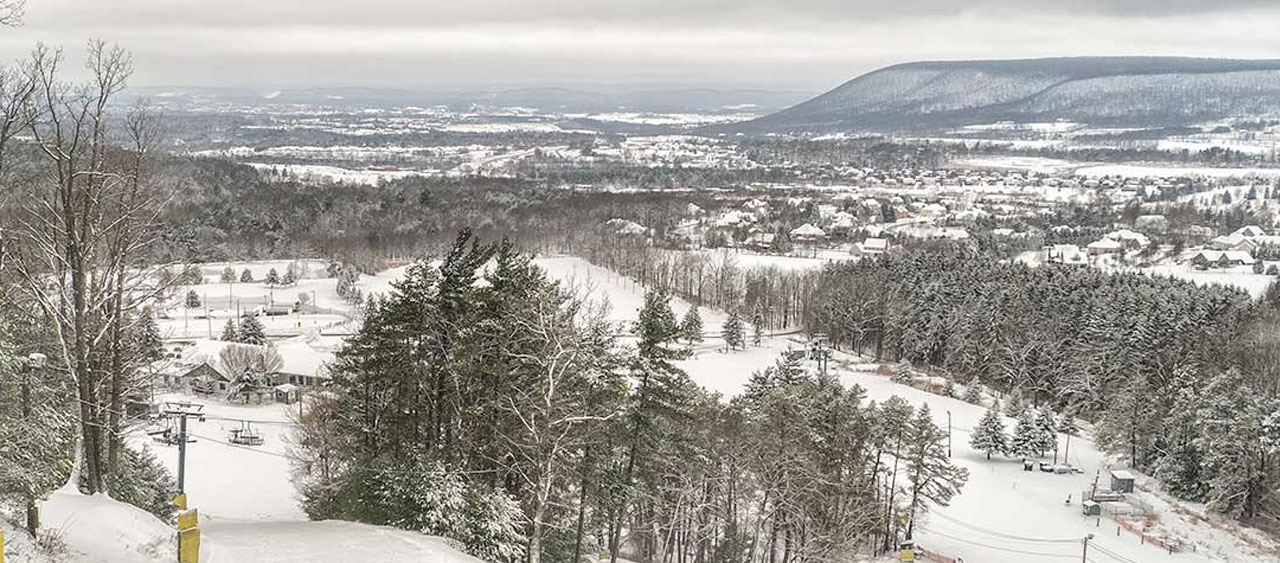
At the beginning of the year, I wrote about 2026 as the 45th anniversary of the Mount Nittany Conservancy. From the audacious initial fundraising efforts that saw Penn Staters and community members rise to the challenge of buying the Mountain to the many years of countless volunteer hours that followed, it has been a “story of pride, determination, and action born of love.“
I’m excited to tease that as the Conservancy turns 45 this year, we will embark on some of our most ambitious undertakings to date. In addition to our recent collaboration with several community organizations to envision an exciting future for the Rockview land, we will soon announce even more progress in our ongoing mission to steward Mount Nittany for the enjoyment of all. I look forward to offering many reasons to earn some of our generous community’s financial support during Centre Gives next month.
In the meantime, Blue-White Weekend offers one of the best opportunities to get up on the Mountain and encounter the spirit of the Valley. So whether you’re coming back to reconnect with Penn State football as the Matt Campbell era begins or simply taking advantage of the improving weather, make a hike up Mount Nittany part of your April plans.
For The Mountain, Chris Buchignani, Vice President
The Future of Rockview
Last month, the Mount Nittany Conservancy proudly joined with 11 local community groups in signing a letter sent to Governor Shapiro and other PA officials about the future of the former SCI Rockview property. Our message outlines an ambitious, but achievable vision that includes safeguarding the Valley’s water quality and prime agricultural soils, protecting its status as a destination for anglers, and creating a new public access trail linking Mount Nittany with the Spring Creek Canyon through a forested corridor.
Check out the extensive media coverage of the growing local coalition aligning behind this “generational opportunity” to maximize the natural resources and distinctive character of Happy Valley.
Over the years, the Conservancy has accumulated a wonderful collection of original writing and archived photos and documents from the rich past of Penn State and State College. Each month, we will highlight one of these recovered gems.
This month, we look back at the 2024 planting of Penn State’s fourth-generation Old Willow, a celebration of the University’s “oldest tradition” in which the Conservancy was honored to take part.
On May 23, 2024, Penn State hosted a ceremony for the official replanting of the fourth generation of Old Willow, Penn State’s longest living tradition dating back to the 1859 planting of the first generation of the tree. The April ceremony was streamed by the Mount Nittany Conservancy on X and speakers included Penn State President Neeli Bendapudi. Penn State News covered the event, publishing photos of the ceremony and the Old Willow sapling now taking root. Conservancy vice president Chris Buchignani recited “The Willow,” a poetic tribute to the first generation of Old Willow that appears in the 1894 edition of the La Vie student yearbook…
Every square inch counts when it comes to conserving Mount Nittany, and you can help us do just that by making a gift to the Mount Nittany Conservancy! In recognition of your gift you will receive a Mount Nittany Square Inch Marker, a beautiful proclamation of your role in Mount Nittany’s conservation. Every dollar goes directly to supporting our mission to protect and preserve the Mountain for all to enjoy.
Looking to surprise the Penn Stater or outdoor enthusiast in your life? Mount Nittany Square Inch markers are an unforgettable gift for birthdays, holidays, and graduations.
Our featured book this month is ‘The Pennsylvania State College 1853-1932: Interpretation and Record,’ the first history of Penn State. Available in print and digital.
Although Dr. Erwin Runkle wrote this history of Penn State during the 1930s, only recently has it become widely available through Nittany Valley Press. His meticulous reconstruction of the University’s birth and growth—from the revolution in American education that sparked its founding to its establishment as Pennsylvania’s land-grant college—brings the Penn State story to life with a rare blending of keen attention to detail and uncommon warmth. Runkle’s opinionated, but affectionate narration offers a revealing vision of the Nittany Valley’s rich past. Virtually every page holds a new treasure for any heart that truly loves the name of Dear Old State.
Spring time is a wonderful time to experience Mount Nittany. Get prepared before you go with our Hike Mount Nittany page; find all the maps, tips, and guidelines you will need to make your trip a safe and memorable one!
Protecting Mount Nittany in its natural state has been a generational project for Penn State alumni and residents of Central Pennsylvania. Preservation of the Mountain must remain a priority for aesthetic, ecological, cultural, and recreational purposes, and the Mount Nittany Conservancy vigorously supports an ambitious, creative vision to extend this spirit of conservation to the surrounding landscape. The Conservancy proudly joins a dozen community-minded organizations in signing this joint letter to Governor Shapiro concerning the future of the Rockview prison lands.
Dear Governor Shapiro,
In your governance of the Commonwealth, closing SCI Rockview is just one difficult decision of many. For those of us in central Pennsylvania, however, the effects of this decision have been tremendous. As you know, the workforce and economic repercussions have been harsh; harder for some than others.
The purpose of this letter is to look ahead. The 5,800 acres of Rockview lands define Happy Valley much as Mount Nittany, Beaver Stadium, and the Spring Creek Canyon. The agricultural landscape tells us, subtly yet unmistakably, that we are traveling between two distinct population centers – Bellefonte and State College. The open, expansive property provides critical groundwater recharge for Spring Creek and a forested ridgeline visible from everywhere across the region.
We understand that the future of the SCI Rockview lands is uncertain at this time. However, given the importance of this land on local, regional, and state-wide scales, we respectfully request that the decision-making process regarding its future be fully transparent and include public input. We look forward to joining with other community stakeholders to support the land use planning process.
Here, we wish to share a vision for the property – one that preserves its unique cultural heritage, serves the public good, and sustains natural resource values for generations to come.
Public Good Centre County has unique opportunities for economic development. The Chamber of Business and Industry in Centre County has recently created an Economic Development Strategic Plan that outlines twelve goals. Thoughtful reuse of some of the Rockview property could help our community thrive by addressing two specific goals:
• Amplify Happy Valley as Central PA’s tourism, outdoor recreation, and sports destination hub
• Invest in placemaking and social gathering spots throughout the county
Easy access to outdoor recreation is an important part of central Pennsylvania’s quality of life and an essential component for our economic development. Spring Creek is an international angler destination because of the healthy, wild trout population, and it must be protected. A new public access trail connecting Mount Nittany to the Spring Creek Canyon through a forested corridor would continue the legacy of this public land providing public benefit forever. In addition, strengthened and expanded access to Mount Nittany Conservancy’s trail system would enhance the outdoor experience on the peak of Mount Nittany overlooking Happy Valley. In addition to outdoor recreation, there are many other potential land uses that would serve the public good.
Sustained Agricultural Production Since 1915, SCI Rockview has embodied the farming and forestry roots of central Pennsylvania. Active farming was integral to the institutional program which provided inmates with improved conditions, less overcrowding, and productive employment skills.
The valley lands of Rockview are prime agricultural soils. Maintaining agricultural lands on this property is important for the cultural association of this landscape and for food security. A loss of farmland at Rockview on top of the negative impacts the 322 Connector highway project will have on farmland in Centre County could have a serious impact on the combined capacity and profitability of the farming community. Similarly, the actively managed forests on Mount Nittany improve forest health, secure scenic vistas, and yield forest products.
Ecological Services The hydrologic role of the prison land is invisible, and, therefore, often underappreciated. For a thousand years, and longer, this land has provided high quality groundwater recharge and a steady supply of cold groundwater to Spring Creek. Most of the property is classified as High or Above Average groundwater recharge potential by the Susquehanna River Basin Commission. Any plans to develop portions of the site will need to carefully and completely address water quality impacts, including temperature, from stormwater management and sewage treatment systems.
The summit of Mount Nittany is conserved by the Mount Nittany Conservancy because its iconic topographic feature defines Nittany Valley, Happy Valley, and Penns Valley. Due to its intact and connected forest cover, Mount Nittany serves as a dispersal pathway for climate adaptation of wild species (e.g. The Nature Conservancy Resilient Land Mapping Tool). Restoring a forested connection from Mount Nittany to the Spring Creek Canyon would advance the goal of improving habitat connectivity across valleys and reinforce the strong pride of place that defines our community.
The Vision Given these values, we believe that the following opportunities could be accommodated in the Commonwealth’s planning for this landscape.
• The mountain top and side remain in active forestry.
• Productive farmland is maintained in the valley.
• A forested wildlife corridor reconnects the side of Mount Nittany with the Spring Creek Canyon to improve habitat conditions and cool runoff.
• A public access trail connects Mount Nittany to the Spring Creek Canyon through this forested wildlife corridor, continuing the legacy of this public land by providing public access.
• A new trailhead improves access for Mount Nittany Conservancy’s trail system and takes pressure off the Lemont trailhead.
• For any development of this property, there is no net increase in stormwater runoff and the highest standard of sewage treatment to protect Spring Creek’s status as a high-quality cold-water fishery.
The organizations collaborating on this letter possess the connections, expertise, long-standing commitment, and stable capacity to make this vision a reality. We look forward to joining with other community stakeholders to form an advisory workgroup that can contribute technical expertise and community connections throughout the planning process. Importantly, we also appreciate the long-standing partnership of College and Benner Townships in managing the values addressed in this letter.
As your administration continues to consider the future of Rockview lands, we invite you or your representatives to reach out to us to explore how this much-loved property can contribute to an extraordinary future for the people of Centre County.
Ross Lehman, director of the Penn State Alumni Association from 1970-83 and one of the great bards of the Nittany Valley, wrote that Mount Nittany “displays a personality of its own in all its seasonal colors, from green to gold to brown to white.” Hear, hear! As a lifelong Pennsylvanian, I embrace the virtues of experiencing four seasons, Winter included.
Nevertheless, the “warmer” temperatures finally arriving last month were welcomed by even the hardiest denizens of Happy Valley. With that sunshine and those above-freezing afternoons came the melt that erased all but a few lingering traces of the massive January snowstorm that had slammed the East Coast.
Decades living in State College have taught me that March conditions in Central PA are nothing if not unpredictable, but when circumstances allow, make some time for a leisurely hike up Mount Nittany. The fresh air and activity will be perfect remedies for cabin fever. The experience of hiking the Mountain’s trails, absent the leafy canopy of late Spring through the end of Fall, offers a unique vibe. So too are the views from the scenic overlooks unique this time of year.
So emerge from hibernation, stretch those limbs, and reconnect with the Mountain. Whether you’re heeding my advice and enjoying Mount Nittany up close or simply admiring from afar, remember that the place, this symbol of our home that inspired Lehman’s poetic admiration, is diligently tended by the Mount Nittany Conservancy for the benefit of all. As always…
For The Mountain, Chris Buchignani, Vice President
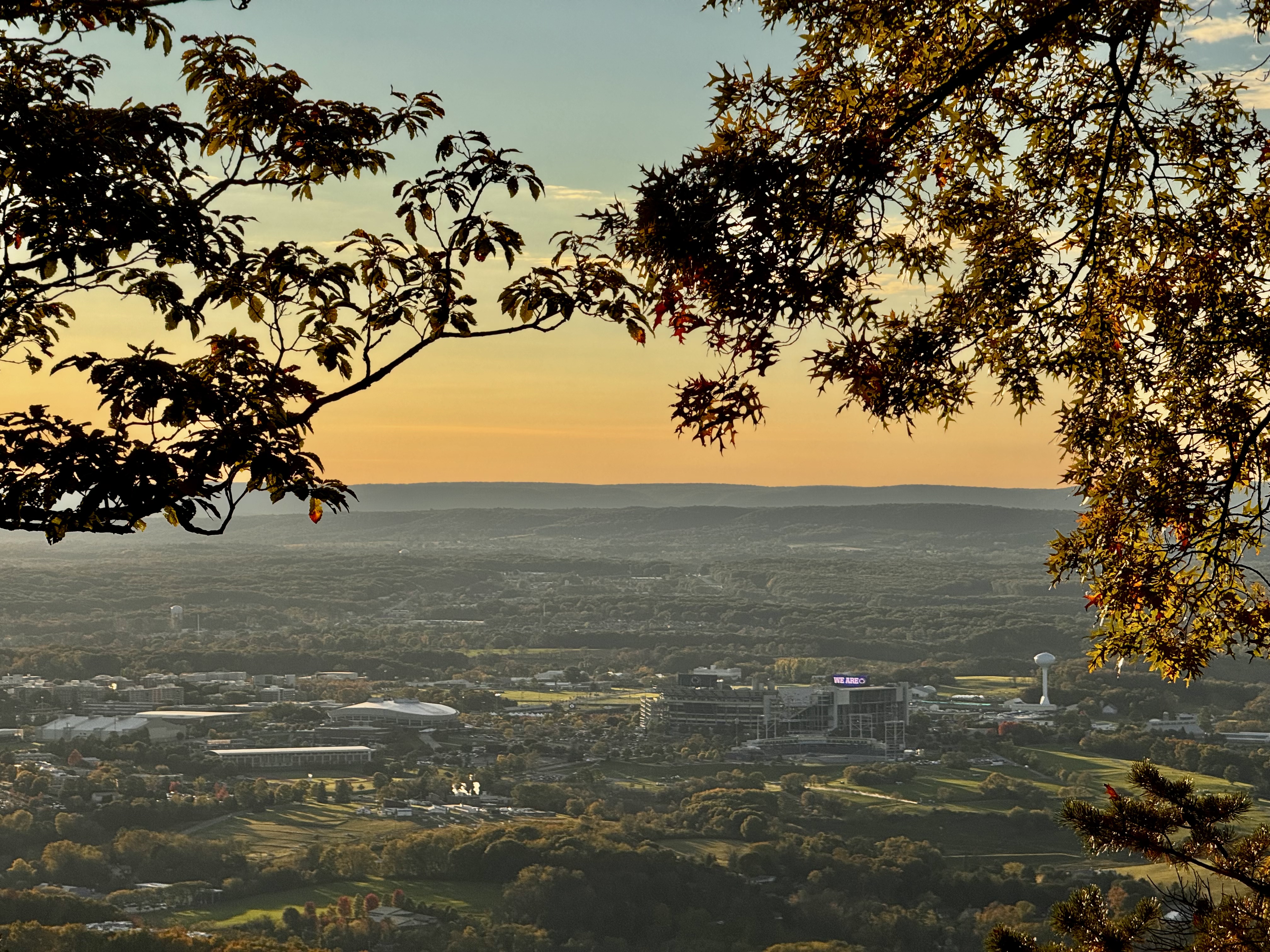
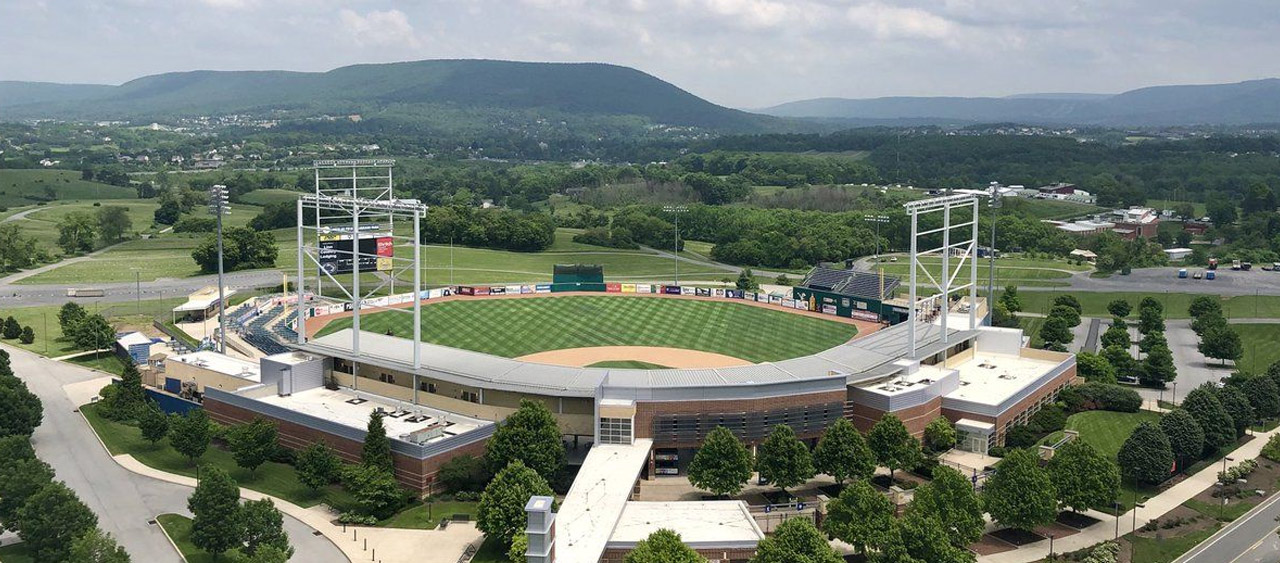
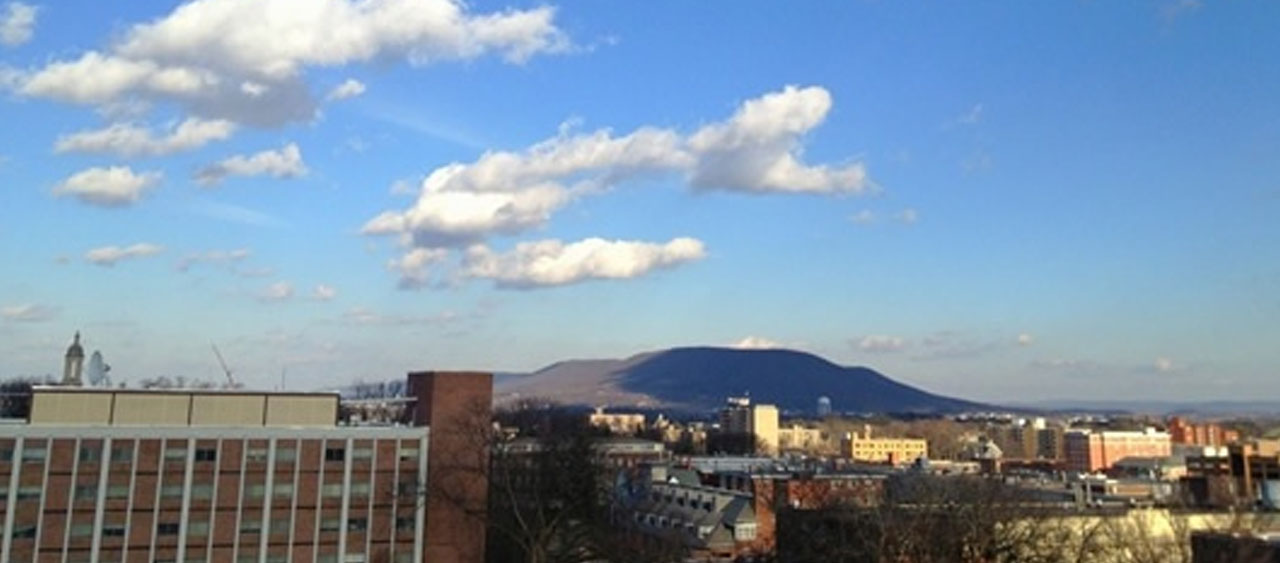
Beaver Stadium undergoes pre-snowstorm preparation for Penn State’s inaugural outdoor hockey game with Old Mount Nittany standing silent watch.
MeetUp Hiking Group Already Active in 2026
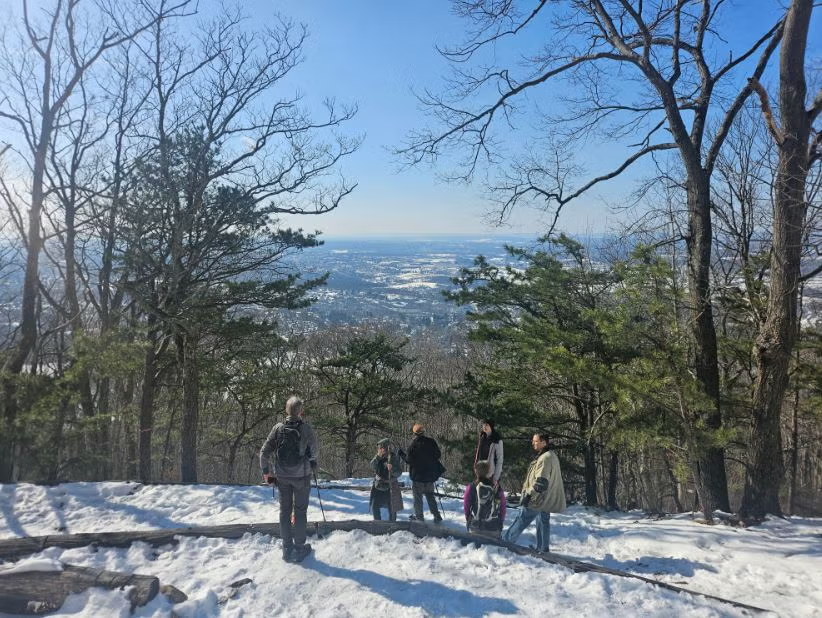
At nearly 400 members, the Mount Nittany Hikers group on MeetUp has been a great way to bring people together around one of Happy Valley’s greatest hikes, and they’re already active this year, despite the conditions. With the bitter cold finally breaking, group organizer and Conservancy director Leon Kolankiewicz led a wintry Valentine’s Day hike. A dozen enthusiastic participants had a great time in the very wet snow. It was so warm and sunny that it was even slushy in places.
There’s never a bad time for a self-guided encounter with Mount Nittany, but for a more social experience, join our MeetUp group to participate in future guided hikes.
Over the years, the Conservancy has accumulated a wonderful collection of original writing and archived photos and documents from the rich past of Penn State and State College. Each month, we will highlight one of these recovered gems.
This month, with Penn State celebrating its first gold medal-winning Winter Olympian Tessa Janecke, we highlight the University’s strong track record of supporting women’s sports.
Penn State’s record on women’s athletics, in its entirety, has got to be among the most consistently impressive of any institution in the nation. Dedicated, dynamic personalities, working within the right conditions, yielded a culture that continues to bear fruit today. Penn State blends a rare commitment to opportunity and excellence and succeeds in both. While many universities prioritize wins and national championships, and some emphasize offering a range of competitive opportunities, only an elite few excel in both areas.
Every square inch counts when it comes to conserving Mount Nittany, and you can help us do just that by making a gift to the Mount Nittany Conservancy! In recognition of your gift you will receive a Mount Nittany Square Inch Marker, a beautiful proclamation of your role in Mount Nittany’s conservation. Every dollar goes directly to supporting our mission to protect and preserve the Mountain for all to enjoy.
Looking to surprise the Penn Stater or outdoor enthusiast in your life? Mount Nittany Square Inch markers are an unforgettable gift for birthdays, holidays, and graduations.
Our featured book this month is ‘The Birth of the Craft Brew Revolution,’ preserving the timeless whimsy of America’s first recurring craft beer newspaper columns — ground-breaking, forward-thinking, and published here in Happy Valley. Available in print and digital.
Today, it is not unusual to enter a bar and find a laundry list of exotic beers on tap or to hear news of a local brew pub or microbrewery opening up. Such was not the case in 1984 (only five years after the legalization of homebrewing) when the editor of the Centre Daily Times approached local lawyer Ben Novak about writing a bi-weekly beer column for the paper. Collected here and available for the first time since their original publication are those newspaper columns, the very first of their kind in the United States. They harken back to a time when only a small American subculture had discovered the endless, delicious possibilities of good beer.
As the “lion” gives way to the “lamb,” this month offers a rewarding opportunity to reacquaint yourself with the Mountain. Get prepared before you go with our Hike Mount Nittany page; find all the maps, tips, and guidelines you will need to make your trip a safe and memorable one!
This article was the cover story for the Fall 2018 edition of TOGA (The Obligatory Gridiron Annual) magazine.
Wally Triplett passed away on November 8, 2018 at age 92.
You couldn’t be faulted for missing it. The modest three-story, cream white house looks virtually identical to when it was built more than 100 years ago. Nestled on a block of student rentals at 119 North Barnard Street, Lincoln Hall stands as a paramount monument to the Penn State Spirit, but also one of its least appreciated.
Today, you’re likely to find the residents of Lincoln Hall, which is located less than two blocks from campus, listening to music and cracking open cheap beer on the porch, as they were when I stopped by on an unseasonably warm February Happy Valley day. They didn’t realize when they signed their lease that they were about to live in one of the most important lasting structures in State College — one that housed an Olympic gold medalist and the first black player drafted into the NFL. Those students only found out about the significance of their current residence after they moved in; its story is memorialized on a plaque installed on the right side of the porch in 2012 by the Penn State Alumni Association and the State College Downtown Improvement District.
The house, its name taken from the former President of the United States, was once a rooming house for male African-American students at the Pennsylvania State College — one of only a few places in town where they could live at the time. Penn State was, in many ways, ahead of its time when it came to racial inclusion in America — Jesse Arnelle, the African-American basketball star and eventual longtime Penn State trustee, was elected student body president in 1955, well before many universities were even fully integrated.
Nevertheless, the University still had its share of ugliness when it came to racial equity, including an unofficial campus housing policy that restricted black students from living in on-campus dorms and most Downtown houses until well into the late 1940s. Harry and Rosa Gifford bought the house in the late 1930s when they moved their family from Mississippi to work as fraternity cooks, and they immediately began accepting six to eight African-American students each year as tenants. The place quickly became the center of black student life at Penn State, and at times, more than half of the University’s black student population resided there. Denied access to dormitory halls on campus such as their white peers knew, the sort that bore the name of some forgotten figure of historical relevance, Old State’s earliest black students made one of their own. The house on North Barnard became “Lincoln Hall.”
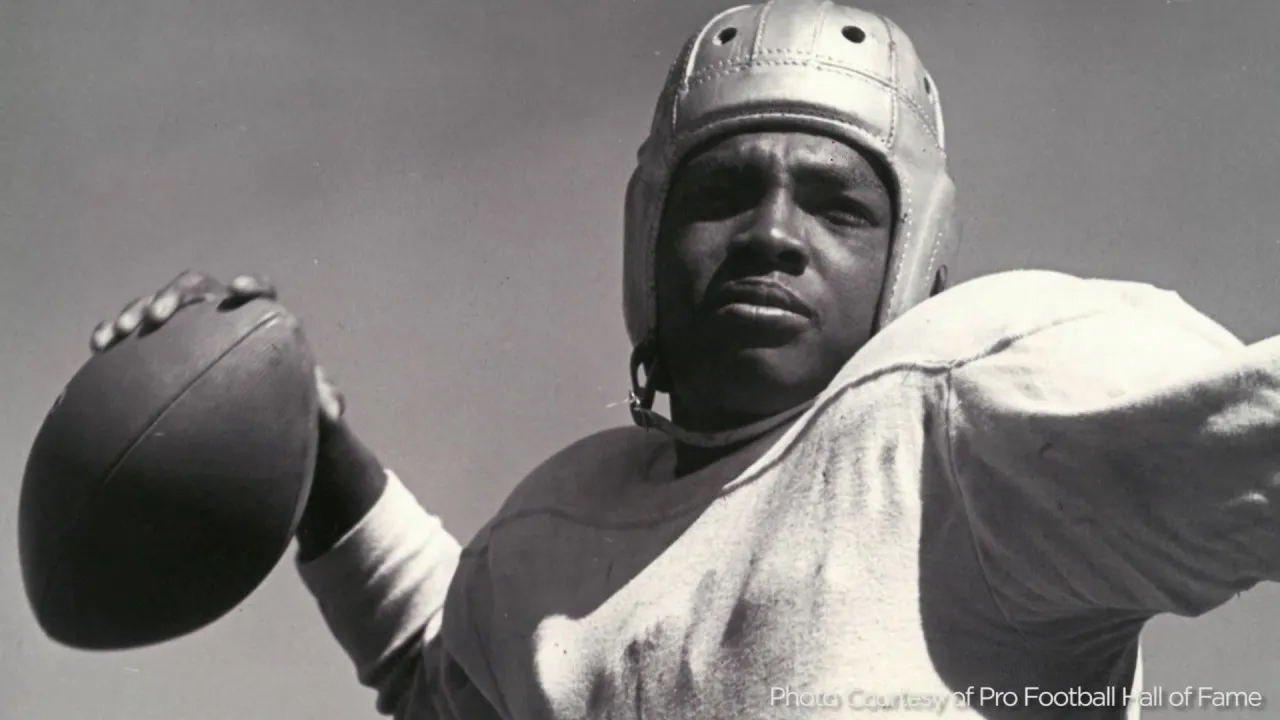
Its most famous resident was the 19-year-old Wallace Triplett. The Cheltenham High School football captain arrived from his home in the Philadelphia suburb of La Mott, Pennsylvania in August 1945 with no place to stay. Penn State coach Bob Higgins referred Wally to the Giffords, and he moved in soon after. “Whenever you look at the NFL, which is the largest thing going today, trickle that down to the fact that the seed that was planted that started this negro into the NFL started right here at Penn State,” Triplett said at the plaque dedication ceremony in 2012. “And it started here in Lincoln Hall.”
The legend of Wally Triplett almost didn’t happen. The still-segregated University of Miami offered him an athletic scholarship, sight unseen, only to revoke it after they found out he was black.
“The great war was fought and blood was shed and advancement is still being made, but Wallace, as I previously stated, I believe it will be a slow transition and our generation will not see the transition take place,” wrote Miami head coach Eddie Dunn in the letter rescinding his scholarship. “A thing like this must be reasoned, not fought out. Do not be bitter against a group of people that have nothing to do with the present conditions.”
Triplett has kept that letter to this very day.
In a pinch, Triplett was able to secure a state-funded senatorial academic scholarship to attend Penn State. His story, forged here in the Nittany Valley, would change the state of racial equity in college athletics and personify our University’s cultural values, the spirit of which still lingers to this day.
But what is the story of Wally Triplett?
“I didn’t do anything, you see,” Triplett told the Penn Stater Magazine in 2009. “It wasn’t like I was the leader. This was America in that age, and that was the way things were, and you didn’t question, and yet these guys took it upon themselves to say, ‘No. We play all or none.’”
Triplett’s modesty is a tenant of his personality today, as it has been for virtually all of his 91 years on this earth. But those now-weathered eyes witnessed one of the most beautiful Penn State stories ever told — one in which he was the central figure, transcending the bounds of time and, even if not the literal inspiration, embodying the meaning behind the phrase, “We Are Penn State.”
The story is told in two-parts. Triplett saw limited playing time in 1945 — becoming, along with Dennie Hoggard, the first African-American to take the field for Penn State — and earned a varsity letter in 1946, also the first black player to do so for the Nittany Lions. Triplett made the switch from tailback to wingback early in the 1946 season and was the team’s most adept kick returner.
But Wally Triplett is defined more by the game he didn’t play than the ones that he did.
Triplett first felt trouble when he noticed that familiar name on the team schedule after he returned to campus in the Fall of 1946. The University of Miami, the same school that revoked his scholarship less than two years prior because of the color of his skin, was scheduled for a home game against Penn State on November 29.
Not only did Miami not let black players on its team but, like many southern schools, did not even allow black players on its fields with visiting teams. Miami officials alerted Penn State that traveling with Triplett and Hoggard might prove problematic. The situation gnawed at Triplett — Penn State had a solid squad that year, with only one 3-point loss to Michigan State mid-way through the season and were poised to make a run at a postseason bowl.
Triplett has recounted what happened next hundreds of times. As the legend goes, the team met at Old Main to discuss the situation. They knew of Miami’s stance that bringing Triplett and Hoggard on the trip would make it, as their officials put it, “difficult for them to carry out arrangements for the game.”
The team discussed the situation and held a vote. It wasn’t close. A revote was held, however, so that the few holdouts could make it unanimous. “There was no second thought,” voter Joe Sarabok recalled to the Penn Stater. Penn State would bring all of its players, or it would not play at all.
“We Are Penn State. We play all or we play none. There will be no meetings.”
The Dean of the School of Physical Education and Athletics, Dr. Carl Schott, relayed the team’s decision to the Daily Collegian in the November 6, 1946 newspaper:
“We recently advised the University of Miami that two colored boys are regular members of the Penn State football squad,” Scott said, “and that it is the policy of the College to compete only under circumstances which will permit the playing of any or all members of its athletic teams.”
There would be no game. It would not be rescheduled.
“I call it ‘That Team,’” Triplett recalled during a visit to the All Sports Museum in 2009. “The tradition of leaving your colored players at home was going to be tolerated no more.”
To add to the mythology, it is said that All-American captain Steve Suhey, the coach’s future son-in-law whose family line would produce generations of great Nittany Lions, stood up after the discussion and declared that the team would never have a vote of this sort again. It would never be spoken of; they already knew the answer. It was decided forever.
“We Are Penn State,” Suhey said. “We play all or we play none. There will be no meetings.”
After the 6-2 season of 1946, Penn State knew it had a squad that could compete on the national stage. With most of its starters returning, Penn State’s defense allowed its opponents to score in only three of its nine regular season games, racking up a perfect record and a 319-25 scoring differential and a #4 ranking in the AP poll.
“Yesterday afternoon Coach Higgins called a team meeting of the football players and asked if they would be willing to sacrifice their Christmas vacations to play in a post-season game,” the Daily Collegian reported at the time. “The Lion gridders were enthusiastic in indicating their desire to play.”
Most media predicted the Nittany Lions would receive a bid to play Southern Methodist in the Cotton Bowl on New Year’s Day in Dallas. There was just one problem. Most of the major southern bowls didn’t explicitly ban black players at that time, but they would only be allowed to play if the other team agreed to it.
“The school let it out early — and we were on record — as we all go or none go,” Triplett recalled years later. “And it was up to the Southwestern Conference, among themselves, to determine what they were going to do.”
While Southern Methodist was ultimately willing to waive its policy against playing teams with black players, the Cotton Bowl still had never invited a team with non-white players on its roster. And besides, Dallas remained a segregated city, and there would be no accommodations for Triplett and Hoggard. Penn State received an invitation to play nonetheless. The Cotton Bowl it would need to be.
The team set out on December 21 from the Pullmans bus station in Altoona. After a quick stop for a practice at Washington University in St. Louis, where Higgins had coached from 1925 to 1927, the team arrived just before Christmas at the Dallas Naval Air Station, the only place the team could find that would accept the two black players (separate accommodations were out of the question, as Suhey had declared a year earlier).
Game day came, plagued by an unseasonably frigid Texas wind. Led by future Heisman Trophy winner (and Triplett’s future NFL teammate) Doak Walker, SMU went up early with a 13-0 lead at the half. Penn State scored quickly in the second half bringing the score to 13-7.
History would strike late in the third quarter. Penn State quarterback Elwood Petchel took the snap at the 6-yard line and immediately scrambled out of the pocket, indicating a run. The Southern Methodist defense took the bait. By the time they realized the play, Triplett was already in the back left corner of the endzone, frantically motioning for the ball.
Petchel let it go with a flick of his wrist. There were no defenders in sight. As the ball settled softly in his outstretched arms, Wally Triplett became the first African-American to score a touchdown in the Cotton Bowl — and collegiately, in the entire state of Texas.
Future Penn State athletic director Ed Czekaj came in to kick the extra point. The ball sailed high above the uprights making it difficult to judge its exact trajectory, and although many of the players swore for years after that the ball actually made it through the uprights, the refs determined that the kick was no good. The Nittany Lions would have to settle for a 13-13 tie.
But the score hardly mattered. College football — and Penn State — had changed forever, thanks to the courage of Wally Triplett and “The Men of ‘47” who refused to succumb to the racial pressures of the time.
Journalist and Penn State Alumnus Michael Weinreb wrote that the Penn State players during this period had “such an inextricable bond that they rose above the tensions and preconceptions and prejudices of the era, a group who stood up for civil rights out of loyalty to the bonds they forged on a football field.”
Triplett wasn’t finished breaking barriers. He went on to have a stellar senior season in 1948 and was selected by the Detroit Lions in the 1949 NFL draft.
Although he was the third African-American player taken in the draft, he was the first to take the field in a regular season game, giving Triplett the distinction of being the first African-American draftee to play in the NFL. After being drafted into military service for the Korean War — of course, another first among NFL players — Triplett played a couple more quiet seasons with the Chicago Cardinals before retiring from football in 1953.
Wally Triplett’s story has seen renewed attention in recent years. ESPN covered it in a 30:30 mini documentary, narrated by Penn State alumnus Keegan Michael-Key. Penn State student government leaders voted in 2016 to use the student facilities fee to erect a monument to Triplett near the location of Old Beaver Field, and though the project went in another direction once it reached the administrative level, it is a testament to the enduring appeal of his inspirational story that today’s students were willing to honor him in that way — nearly 70 years after Triplett and “The Men of ‘47” stood in their place.
But what compels such devotion? What is the Spirit of Penn State? Answers can be found through experiencing the ways in which the echoes of our shared past still reverberate through the places that we love. It is revering Mount Nittany. It is tipping your cap to Old Willow and admiring the remaining Elms on the Henderson Mall. It is celebrating the unique vision and singular determination of people like Evan Pugh, George Atherton, and Joe Paterno. And it is remembering places that never should have needed to exist at all, like Lincoln Hall, and the quiet dignity of the pioneers who lived there. It is learning and cherishing – and thereby keeping alive – the story of noble Lions like Wally Triplett, Steve Suhey, and a band of teammates who were ahead of their time.
The Spirit is still there if you want to experience it. Try it. Walk down North Barnard Street and stop in front of the second house on the right. Close your eyes. If you try hard enough, it’s not difficult to imagine Wally Triplett, the African-American son of a Pennsylvania postal worker, his smile reaching ear to ear, bounding down the wood-covered concrete steps of Lincoln Hall, a duffel bag slung over his shoulder, on his way to catch the team bus to the Cotton Bowl, ready to change the course of history.
Conserving the physical spaces of Central Pennsylvania, specifically natural beauty and resources, is critical to safeguarding a distinctive sense of place. It is important, generational work that ensures our home retains its character, but it doesn’t happen by accident or by magic (well, not only by magic at least). It requires vision, effort, and love by human beings who take the time to make a difference – we’ve always been blessed by many such dedicated talents here in Happy Valley and over 45 years at the Conservancy.
I recently looked back on a column by John Hook, one of our former presidents, and expanded on John’s thinking about the importance of place in how we organize our lives. Our featured Nittany Valley Press publication this month is one of two authored by our founding president Ben Novak. Another former MNC president, Pat Farrell, had a lead role in persuading the University’s Board of Trustees to revise the Alma Mater lyrics to honor the women of Penn State and reflect author Fred Pattee’s original intentions.
It’s an honor to serve an organization that has benefitted from the involvement of so many dynamic individuals who – through their hard work, humor, and wisdom, with the Conservancy and beyond – left the Nittany Valley better than they found it. That’s a simple charge and proud legacy we carry with us every day at the Mount Nittany Conservancy.
For The Mountain, Chris Buchignani, Vice President
Teaching Penn State History
Penn State marks its founding this month, presenting an opportunity to highlight a novel milestone in the Conservancy’s work to preserve both the stories and symbolism of our home. For nearly a decade now, Penn State has stood out among its Big Ten peers in offering a three-credit course on Penn State history: History 148 (appropriate, as it corresponds to the number of Centre County’s Civil War regiment, which was led by future Penn State President James Beaver). The momentum to create this class began with an idea from Mount Nittany Conservancy board members and supporters, and today the Conservancy offers perpetual support for teaching the Penn State story through an endowed fund with the University named for lead donor and loyal Friend of the Mountain Steve Garguilo.
We have been gratified to learn about the cool research projects and positive student experiences arising from this popular course offering and hope enrollment will continue to be robust. Encourage the Penn State student in your life to enrich their educational experience by scheduling HIST 148!
Over the years, the Conservancy has accumulated a wonderful collection of original writing and archived photos and documents from the rich past of Penn State and State College. Each month, we will highlight one of these recovered gems, sharing an excerpt and a link guiding you to check out the entire piece. We invite you to explore the rest of our archives once there.
For February, we have a story appropriate for (with no pun intended) Valentine’s Day that also ties into the founding of Penn State, which we celebrate on the 22nd of this month.
In The Legends of the Nittany Valley, a unique and fun mythology emerges for the places in and around Penn State, but our community also has its own real-life fairy tale: The story of the tragically short-lived love between Rebecca Valentine and Evan Pugh, the University’s founding president. We were excited to see the University release this video when it debuted in 2015, summarizing the story of Evan and Rebecca in a format that can bring it to the Penn State family. Watch the the short video, and learn about the tragic, but touching love story at the heart of Penn State’s origins.
Every square inch counts when it comes to conserving Mount Nittany, and you can help us do just that by making a gift to the Mount Nittany Conservancy! In recognition of your gift you will receive a Mount Nittany Square Inch Marker, a beautiful proclamation of your role in Mount Nittany’s conservation. Every dollar goes directly to supporting our mission to protect and preserve the Mountain for all to enjoy.
Looking to surprise the Penn Stater or outdoor enthusiast in your life? Mount Nittany Square Inch markers are an unforgettable gift for birthdays, holidays, and graduations.
Our featured book this month, ‘Is Penn State A Real University: An Investigation of the University as a Living Ideal,’ is a quest for the soul of higher education authored by the Conservancy’s founding president. Available in print, digital, and newly-remastered audiobook.
In answering the work’s central question, former Penn State Trustee Dr. Ben Novak delves into the institution’s lost history and examines what lessons it still holds for us today. Especially now, it holds great treasures for Penn Staters seeking ways to better understand their Alma Mater within a hopeful, common context. We humbly offer this work as a guidepost on the path toward continual rejuvenation, ever the task of a living and healthy institution.
Hiking the Mountain can be a “four seasons” experience, with each time of year bringing its own rewards. If you plan to visit soon, be sure to visit our Hike Mount Nittany page for all the maps, tips, and guidelines you will need to make your trip a safe and memorable one!
Thanks for spending a few minutes of your day with this first message “From the Mountain.” Going forward, we’ll share these updates on the first of each month, keeping you connected to the work of the Conservancy and strengthening your tether to Happy Valley through stories and images of the beloved Mountain that reminds us of home.
This is a special year for us, because 2026 marks the Mount Nittany Conservancy’s 45th anniversary! Reflecting on our remarkable origins – what retired Penn State Alumni Association executive director Roger Williams called a “story of pride, determination, and action born of love to preserve the largest natural physical symbol of our alma mater” – underscores the everyday miracle of a community coming together to protect its most distinctive landmark and reminds us of the extraordinary efforts of so many that have kept that spirit of reverence for place alive for nearly half a century. Even as we now look ahead toward days that promise to be among the most exciting times for the Conservancy since its founding 45 years ago, we can also look back with appreciation on accomplishments and milestones from the year that was.
In 2025, the Mount Nittany Conservancy…
Continued a long-term effort to enhance parking access to the Mount Nittany trailhead with the assistance of College Township.
Conducted multiple volunteer trail maintenance hikes, including clearing over 80 downed trees felled by this past Winter’s violent windstorms.
Monitored effectiveness of critical anti-moth spray treatments that protected the Mountain’s foliage from widespread destruction.
Completed enhancement of three audiobook editions in the Nittany Valley Press catalog – they sound crisp and clear, a tremendous improvement.
Adopted a new logo and set of brand guidelines, establishing a striking and timeless visual identity intended to serve for decades to come…
Stewardship of Mount Nittany and its 8+ miles of public trails requires a year-round commitment, but many hands make light work. We are deeply grateful for the contributions of our tireless board of directors, the many local volunteers who help us care for the Mountain, and the community partnerships that amplify our efforts. Here’s to another year of growth and success, caring for the Nittany Valley’s sacred spaces!
For The Mountain, Chris Buchignani, Vice President
Mount Nittany Conservancy x 1% for the Planet
We are pleased to announce that the Mount Nittany Conservancy has joined 1% for the Planet as an environmental partner! 1% for the Planet is an accountability partner for companies of all sizes that are ready to reject business as usual and give back to environmental partners making a difference around the globe.
Started in 2002 by Yvon Chouinard, founder of Patagonia, and Craig Mathews, founder of Blue Ribbon Flies, their members have given hundreds of millions of dollars to environmental partners to date. As of this writing, 1% for the Planet has impacted more than 11,680 organizations in over 110 countries through certified contributions exceeding $823 million. Affiliated business members can now count contributions to the Conservancy toward their certified 1% annual giving.
Over the years, the Conservancy has accumulated a wonderful collection of original writing and archived photos and documents from the rich past of Penn State and State College. Each month, we will highlight one of these recovered gems, sharing an excerpt and a link guiding you to check out the entire piece. We invite you to explore the rest of our archives once there.
This month, we offer a reflection from now-MNC Secretary Kevin Horne. Writing as a law school student in 2015, Kevin described how staying in State College beyond your undergrad years deepens your connection to the community.
When your time here stretches beyond those first few years spent learning the academic and social intricacies of college life, a change happens. State College, which starts out as little more than a temporary way station on life’s journey, starts to feel more and more like a home unto itself.
All told, somewhere between five and eight percent of my class at the Dickinson School of Law also holds an undergraduate degree from Penn State. We are, in many ways, the odd creatures in a heterogeneous class of 191, which represents 138 different institutions of higher education, 48 undergraduate majors, six countries, and 27 states (plus the Virgin Islands). By the time we graduate law school, my fellow Penn Staters and I will have spent at least seven years in the Nittany Valley, which will amount to something like 30 percent of our entire lives – and probably closer to half of the cognizant lives that we can actually remember.
Every square inch counts when it comes to conserving Mount Nittany, and you can help us do just that by making a gift to the Mount Nittany Conservancy! In recognition of your gift you will receive a Mount Nittany Square Inch Marker, a beautiful proclamation of your role in Mount Nittany’s conservation. Every dollar goes directly to supporting our mission to protect and preserve the Mountain for all to enjoy.
Looking to surprise the Penn Stater or outdoor enthusiast in your life? Mount Nittany Square Inch markers are an unforgettable gift for birthdays, holidays, and graduations.
Our featured book this month is ‘The Legends of the Nittany Valley,’ imbuing Mount Nittany, Happy Valley, and the surrounding areas with their own unique folk lore. Available in print, digital, and newly-remastered audiobook.
What is Mount Nittany? It is a geological formation whose distinctive slope is burned into collective memory, a place where generations of Penn State students have come to share camaraderie, conduct ritual, and even pursue romance, where we travel to find solace for peaceful contemplation, a symbol that means so much to the denizens of our Valley that more than once they banded together to preserve its unspoiled beauty for future generations. And perhaps… just perhaps… it is also a windbreak that rose up miraculously in one night to shield the fierce and lovely Princess Nita-Nee from the wicked winds of the North.
So while the Nittany Valley is, of course, a tangible, everyday place where people live and work, a magical kingdom lurks just beneath the surface, just waiting to be discovered by those with a pioneering and creative spirit. To the extent that, for readers of these stories, it can become all of these at once, this book will have served its highest purpose.
Hiking the Mountain can be a “four seasons” experience, with each time of year bringing its own rewards. If you plan to visit soon, be sure to visit our Hike Mount Nittany page for all the maps, tips, and guidelines you will need to make your trip a safe and memorable one!
This past Saturday morning (June 28), a group of dedicated volunteers gathered once again to help care for Mount Nittany — continuing a series of seasonal maintenance hikes that began in late April. These ongoing efforts are part of the Mount Nittany Conservancy’s long-standing commitment to preserving and protecting then Mountain’s more than eight miles of trails.
Over the course of three recent hikes, roughly a dozen volunteers — including current and emeritus board members , local supporters, and students from the Penn State Lion Ambassadors — worked together to identify and address problem areas throughout the trail network. From Blue-White Weekend through the early days of Summer, their shared efforts have helped ensure that Mount Nittany remains open and accessible for all who make the journey.
Thanks to the respectful habits of most visitors, very little litter was found. But a series of windstorms had left significant trail obstructions. Volunteers have worked diligently to clear more than 70 downed trees that had fallen on trails across the Mountain. Trail markers were also refreshed with a fresh coat of paint, helping hikers to stay on course while exploring.
While maintenance work is ongoing throughout the year, the impact of these early-season hikes is already being felt. From casual hikers to lifelong Penn Staters, everyone benefits from the care and attention shown by those who give their time to steward this beloved landmark. We are deeply grateful to everyone who took part in these efforts — and to the broader community, whose support over the decades has allowed the Conservancy to protect Mount Nittany as a living symbol of our region’s cultural and environmental heritage.
If your team or organization is interested in joining us for a future maintenance hike, we’d love to hear from you! Trail care is a fun and meaningful way to give back — and a great team-building activity for anyone with ties to the Nittany Valley. Reach out to us at volunteer@nittany.org to learn more.
Thank you to all who contributed to the Mount Nittany Conservancy’s 2025 Centre Gives campaign! We were grateful to achieve our best-ever Centre Gives fundraising year in terms of 80 unique donors and our second-best ever Centre Gives year in terms of $14,025 total raised dollars.
First-time donors to the Mount Nittany Conservancy helped drive this record-setting year, and every dollar will directly support the conservation of Mount Nittany, our beautiful, shared, and treasured natural landmark.
Centre Gives is an annual online giving event in Central Pennsylvania designed to encourage community giving and to support the work of regional missions. Mount Nittany Conservancy is one of more than 200 nonprofits that participates in Centre Gives. Donors join a community of thousands in support of worthy causes across all our communities, all near Mount Nittany’s gentle shadow.
If you missed the opportunity during Centre Gives to begin or renew your support for the Mount Nittany Conservancy, you may still support this mission with a direct and secure online gift, or by mailing a gift to:
Mount Nittany Conservancy P.O. Box 334 State College, PA 16804
If you’ve already made a gift, thank you! We ask that you forward this appeal to family and friends and ask them to match your gift during these final hours of Centre Gives.
Your love for Mount Nittany makes its conservation possible. And the work of conservation is costly. We are asking for your contribution today toward our Centre Gives fundraising goal for conservation work over the year to come.
Signage. Brochures. Trail maintenance. Dead tree clearing. Scenic overlook renewal. Erosion repair. Each of these crucial areas of the Mount Nittany Conservancy’s work depends on support from the people of Penn State and the Nittany Valley’s communities. Now is the time that we ask that you renew your support.
If you haven’t yet made your gift, please do so now. If you want to connect with us directly to make a gift, please call the Mount Nittany Conservancy at (814) 264-4646.
A little while ago, for the first time in 15 years, an invasive pest called the “spongy moth” was on the verge of devastating significant acreage on Mount Nittany—defoliating and eventually killing many of Mount Nittany’s beloved trees. In response, the Mount Nittany Conservancy hired a team to conduct aerial spraying to protect the Mountain from the ravages of invasive and forest-killing moths. This work succeeded in stopping the spongy moth—and it was possible because of the faithful financial support of our donors.
Now, we are about to embark on an ambitious three year strategic plan to ensure the story of Mount Nittany, its conservation, and its accessibility and beauty is told to new generations. But to do this work, we need your support today.
We’re asking for your gift today—or at the absolute latest, tomorrow by 8pm—during Centre Gives.
Signage. Brochures. Trail maintenance. Dead tree clearing. Scenic overlook renewal. Erosion repair. Each of these crucial areas of the Mount Nittany Conservancy’s work depends on support from the people of Penn State and the Nittany Valley’s communities. Today is the day we ask that you renew your support.
Centre Gives is a unique online giving event in Central Pennsylvania designed to encourage community giving and to support the great work of Centre County nonprofits. We’re one of some 200 nonprofits participating in this giving event.
We are asking you to make a financial gift today to the Mount Nittany Conservancy. You will become one of thousands who are supporting worthy causes across every home and community the lies near Mount Nittany’s gentle shadow.
On the morning of Friday, March 25th, the Penn State Women’s Soccer team took to the trails of Mount Nittany for a surprise team-building experience they won’t soon forget.
The Penn State Women’s Soccer team sings the Alma Mater at the Mike Lynch Overlook. 3-28-25
With nearly the full roster and coaching staff along for the climb, the team hiked to the Mike Lynch Overlook—where they marked the moment by singing the Penn State alma mater together at the summit. The overlook, with its sweeping view of campus and Happy Valley, provided a powerful setting for reflection, connection, and pride. A video of the team’s rendition will be shared alongside this post, capturing a memory that resonates far beyond the trail.
“Mount Nittany is a fundamental part of the Penn State experience.”
Erica Dambach
Head Coach, Penn State Women’s Soccer
“Mount Nittany is a fundamental part of the Penn State experience,” said Head Coach Erica Dambach. “From being the inspiration behind our mascot, to serving as a backdrop to countless memories at Jeffrey Field, Beaver Stadium and beyond, Mount Nittany is always at the forefront of our minds when we think about our Happy Valley home. Our team always enjoys their chances to hike to the summit, experiencing nature while forging stronger bonds with one another that positively impact our program on and off the field. The views of campus from Mount Nittany provide us all with a greater appreciation for our university, our environment and one another.”
For the Mount Nittany Conservancy, moments like these are what it’s all about. The Mountain has long been a symbol of Penn State tradition and pride—a place where students, alumni, and community members can connect more deeply with the spirit of the Nittany Valley.
Whether it’s a varsity athletics program, a student club, or a group of friends looking to share something memorable, a hike up Mount Nittany offers a chance to build affinity and strengthen bonds that last far beyond college.
We encourage other teams and organizations with roots in Penn State and the Nittany Valley to make the trip. Come experience the trail, take in the views, and make your own Mount Nittany moment.
Thank you to all who contributed to the Mount Nittany Conservancy’s 2023 Centre Gives campaign! We were grateful to achieve our second-best ever fundraising year during Centre Gives thanks to the support of 66 unique donors who gave a total of $13,323.
Signage. Brochures. Trail maintenance. Fallen tree clearing. Scenic overlook renewal. Erosion repair. Each of these crucial areas of the Mount Nittany Conservancy’s work depends on support from the people of Penn State and the Nittany Valley’s communities, and Centre Gives is a special time of year to support Mount Nittany.
Centre Gives is a unique online giving event in Central Pennsylvania designed to encourage community giving and to support the work of Centre County causes. Mount Nittany Conservancy is one of more than 200 nonprofits that participates in this annual event. Donors to Centre Gives join a community of thousands who support worthy causes across all our communities, all near Mount Nittany’s gentle shadow.
Mount Nittany Night 2024
We invite you to join us next month for Mount Nittany Night 2024! We will honor Blake and Linda Gall with the Mount Nittany Conservancy’s “Friend of the Mountain” Award, recognizing distinguished service to the cause of Mount Nittany’s conservation as a cultural and environmental landmark.
Celebrate our community and our Mountain with a night of good food, drinks, and fun. Come out to celebrate Mount Nittany, enjoy fellowship with others, and learn about the next chapter in the story of our Mountain’s conservation. Tickets are $40 per person, with all proceeds supporting the work of the Mount Nittany Conservancy. Register today.
Mount Nittany Night 2024 Where: Mount Nittany Vineyard and Winery When: Saturday, June 8 · 6 – 8pm EDT Register
If you’ve already made a gift, thank you! We ask that you forward this appeal to family and friends and ask them to match your gift within the next 90 minutes.
Your love for Mount Nittany makes its conservation possible. And the work of conservation is costly. We are asking for your contribution today toward our Centre Gives fundraising goal for conservation work over the year to come.
Signage. Brochures. Trail maintenance. Dead tree clearing. Scenic overlook renewal. Erosion repair. Each of these crucial areas of the Mount Nittany Conservancy’s work depends on support from the people of Penn State and the Nittany Valley’s communities. Now is the time that we ask that you renew your support.
If you haven’t yet made your gift, please do so now. If you want to connect with us directly to make a gift, please call the Mount Nittany Conservancy at (814) 264-4646.
Last spring, for the first time in 15 years, an invasive pest called the “spongy moth” was on the verge of defoliating significant acreage on Mount Nittany. In response, the Mount Nittany Conservancy hired a team to conduct aerial spraying to protect the Mountain from the ravages of invasive and forest-killing moths.
The good news is that the actions taken against the spongy moth were successful. But the bad news is that the expense was enormous: $40,934.25. And this expense is just one of many that we bear throughout the year to conserve and protect Mount Nittany in its natural state for the benefit of the public.
We need your support today to fund a critically necessary conservation work throughout the year to come. We’re asking for your gift today—or at the absolute latest, tomorrow by 8pm—during Centre Gives.
Signage. Brochures. Trail maintenance. Dead tree clearing. Scenic overlook renewal. Erosion repair. Each of these crucial areas of the Mount Nittany Conservancy’s work depends on support from the people of Penn State and the Nittany Valley’s communities. Today is the day we ask that you renew your support.
Centre Gives is a unique online giving event in Central Pennsylvania designed to encourage community giving and to support the great work of Centre County nonprofits. We’re one of some 200 nonprofits participating in this giving event. Thanks to your support last year, we were able to raise $15,631 in 2023 from the gifts of 78 generous donors.
This year, we’re striving to match or surpass last year’s total raised during Centre Gives. The Mountain won’t be the same without your help. Our shared Blue and White Trails won’t be the same without your generosity.
We are asking you to make a financial gift today to the Mount Nittany Conservancy. You will become one of thousands who are supporting worthy causes across every home and community the lies near Mount Nittany’s gentle shadow.
As sweet as any Homecoming victory at Beaver Stadium may be, even sweeter for many students, alumni, and friends is a Penn State Homecoming hike on Mount Nittany.
Penn State Homecoming, in its own words, exists to “celebrate tradition and instill pride in all members of the Penn State family through active engagement of students, alumni, faculty and staff across the community.” Tens of thousands of Penn Staters and friends return to Happy Valley for Homecoming, and hundreds make the special journey into Lemont and up to the Mount Nittany Trailhead, either to the Mike Lynch Overlook or to Mount Nittany’s other overlooks across its miles of trails.
The journey to Happy Valley for Homecoming is a special tradition in itself, as one recalls the highs and lows of days gone by, but the journey from Penn State’s crimson-hued campus to the top of the Mountain stirs in the heart not only the memories of the past but a clarity and recognition of the sweetness of our presently-unfolding lives. Our loyalty to Penn State, and our love for Mount Nittany, bear witness to a deeper reality: as a people who share common loves, we also share a common future.
We hope that Mount Nittany remains forever a treasure for Penn Staters, Central Pennsylvanians, and friends, and that these scenes from Penn State Homecoming 2023 and a hike to the Mike Lynch Overlook remind you of a place you will always be able to call home.
Approaching the Mike Lynch Overlook
Near sunset at the Mike Lynch Overlook
Consider making a one-time or recurring financial gift to the Mount Nittany Conservancy to support our perennial work of conservation. Together, we will ensure Mount Nittany remains accessible and for the public benefit for the future.